Coming of age
Settlements now show how far they've come, levelling up gets its moment, crafting got a proper workbench, and people finally dressed for the Stone Age.
A settlement in Eras grows from a campsite to a hamlet, a village and a town. Until today you mostly learned that from a line of text. This update is about making that growth something you can see and feel, and about the people who live there.
Settlements that show their age
The heart of every settlement is its fire. Now it changes as the settlement grows. A hamlet hangs a cooking frame over the fire, and its huts stand on dry-stone footings under thicker thatch. A village raises a banner beside the fire in its realm's colour. A town rings its hearth with standing stones.
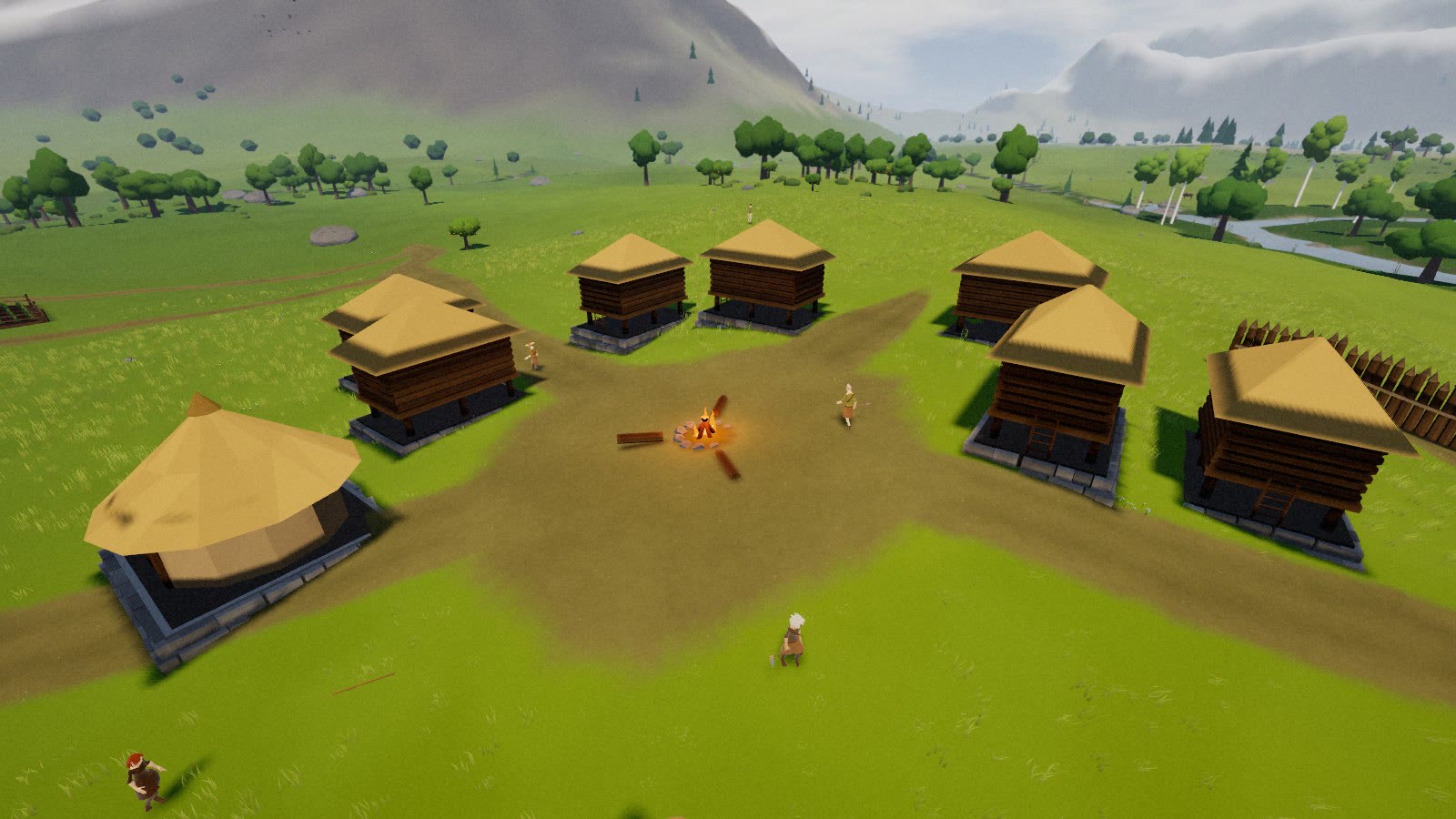
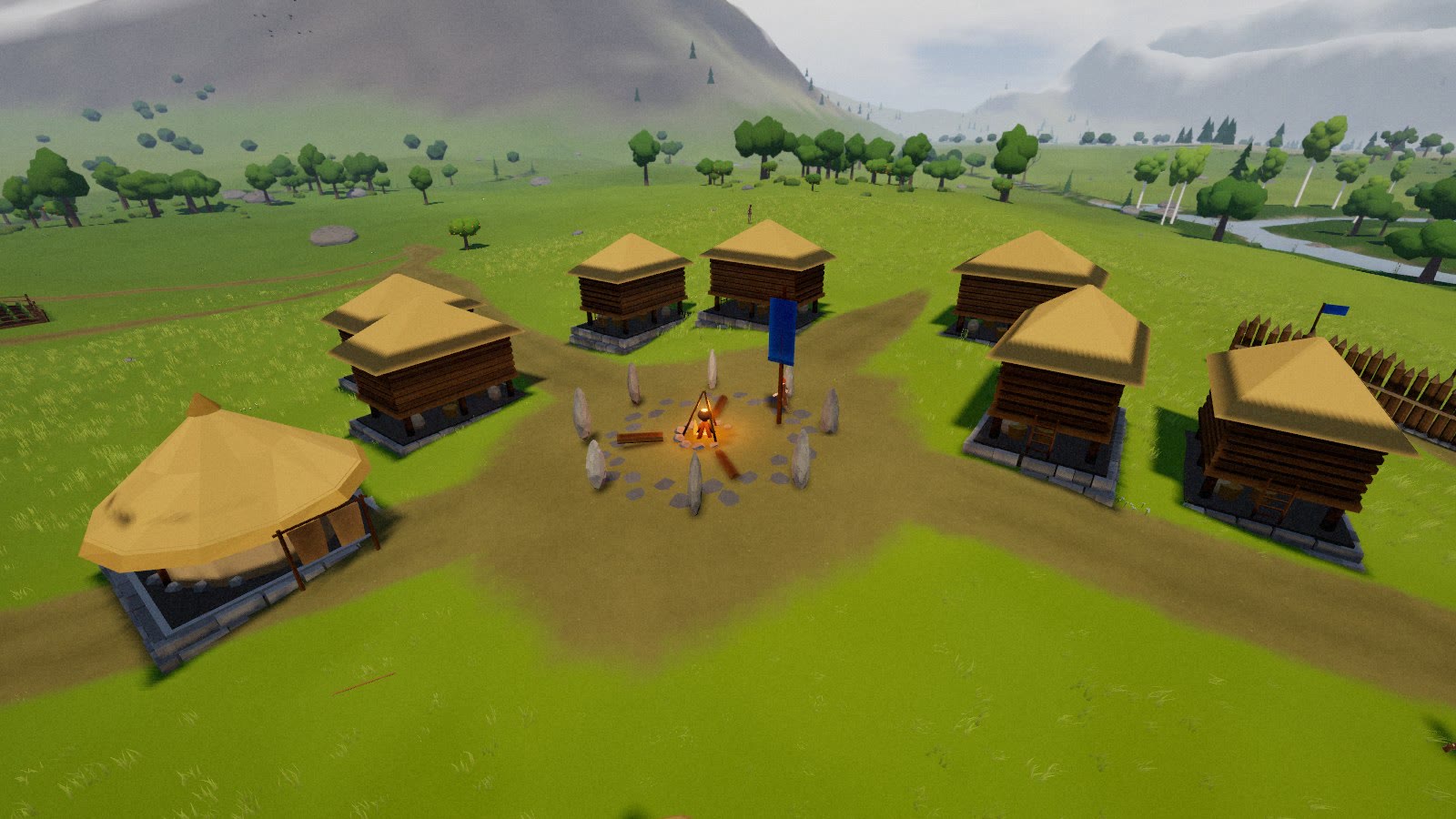
Each realm's colour is the only strong colour in the scene, the way heraldry works. The banner is the first place you see it from a distance: you can tell whose village is on the next hill before you reach it.
A moment when you level up
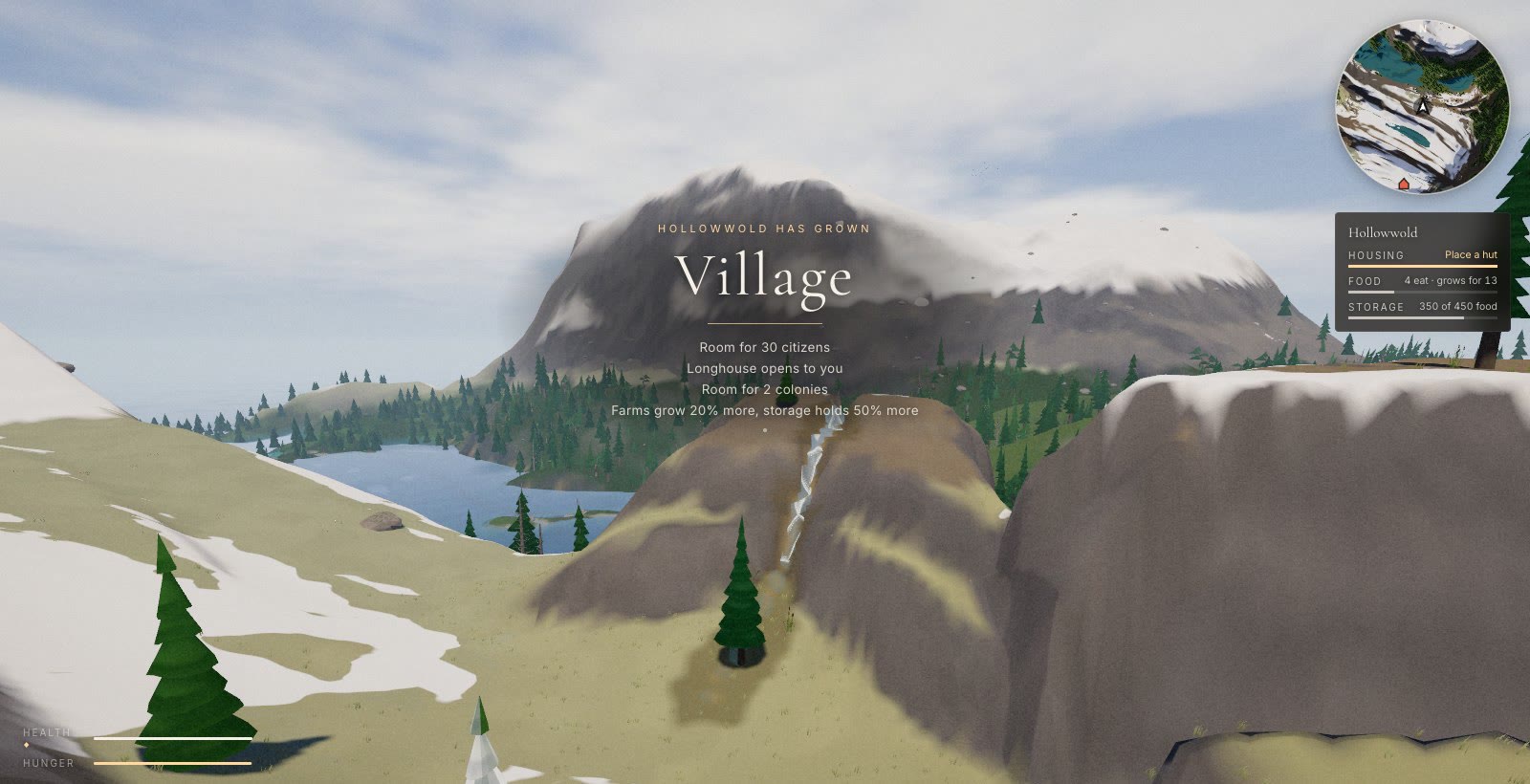
When your settlement grows a level, its new name rises over the world with what it opens to you: room for more people, new buildings, a colony, better harvests. A short phrase of lyre and flute plays, then the world goes quiet again. It waits until you're out of a fight and out of the menus, so you don't miss it.
A proper workbench
Crafting was a long list of text that ran off the bottom of the screen. Now it's a workbench: a card for each thing you can make, with a picture of the thing itself, and the one you choose shown large beside them, with what it does and what it costs against what you carry.
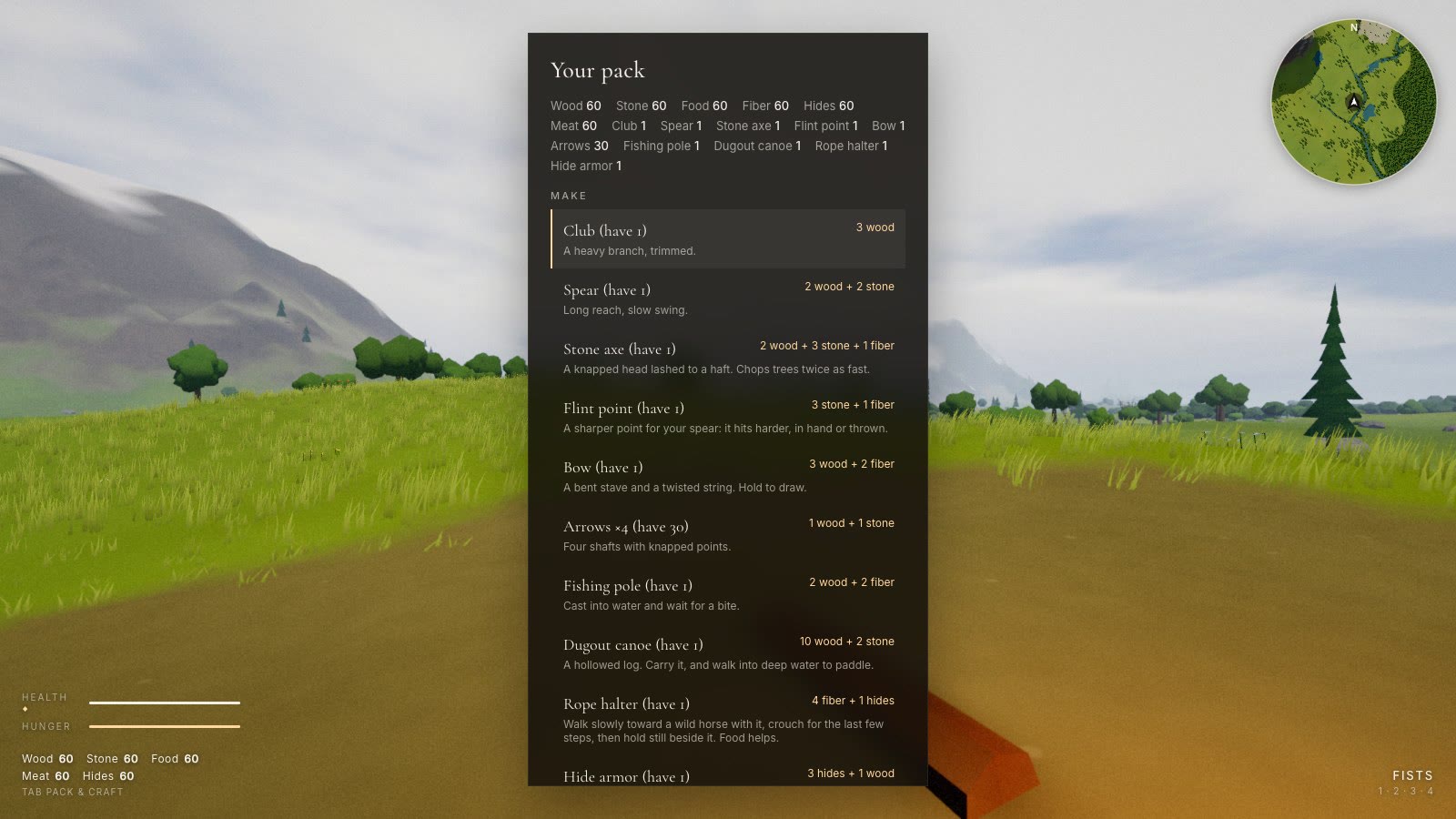
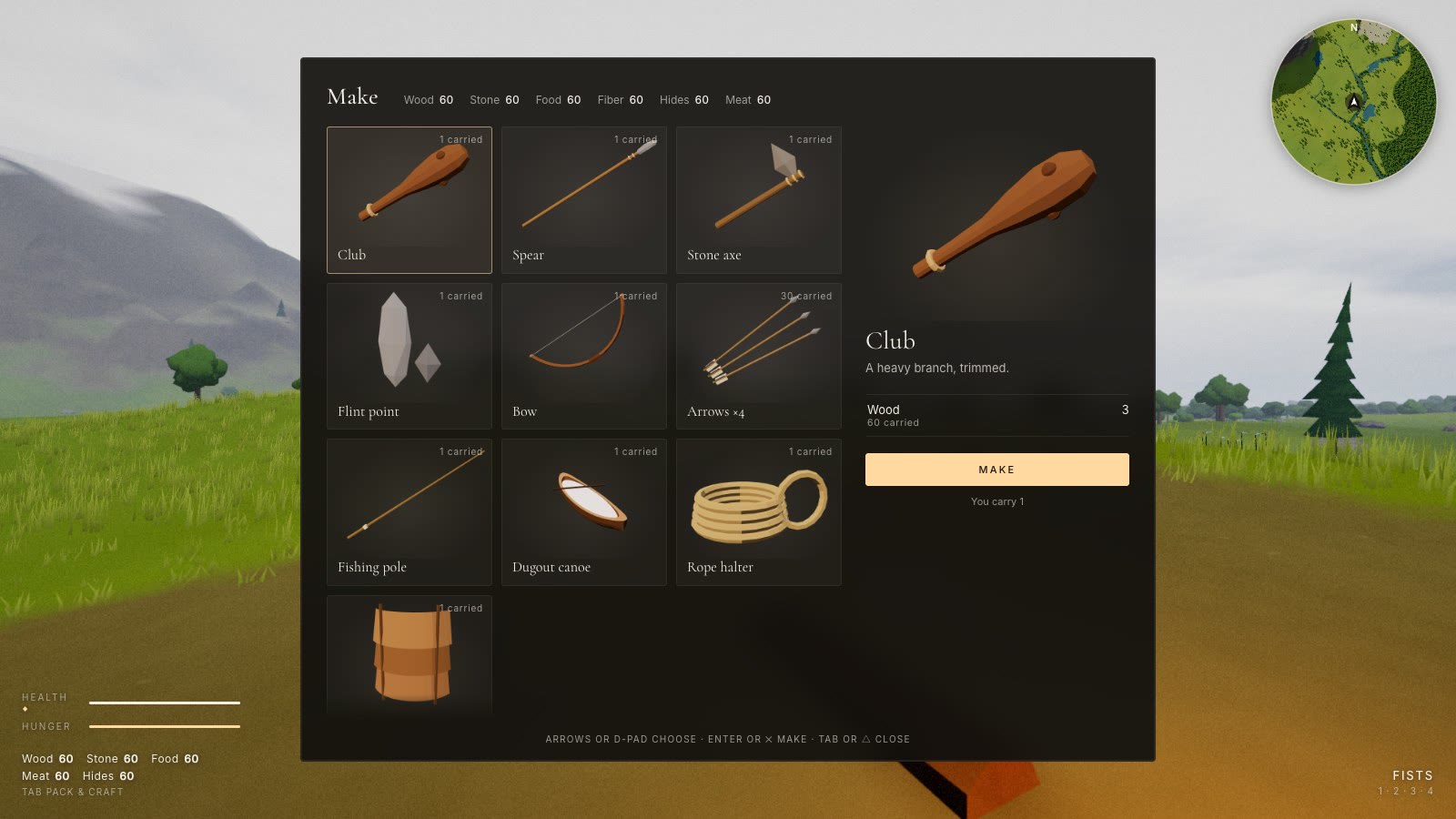
Every panel over the world now shares one frosted, dark, warm surface. Before, each took the colour of whatever was behind it: grey against the sky, olive over grass, slate over the sea.
Dressed for the Stone Age
We wrote a design brief for how settlers and soldiers should look, starting from a real outfit: the clothes of the 5,300-year-old Iceman found in the Alps. He wore stitched hide, a belt with a pouch, a bearskin cap, and shoes of deerskin stuffed with grass. The first step was obvious. Nobody in Eras should be barefoot.
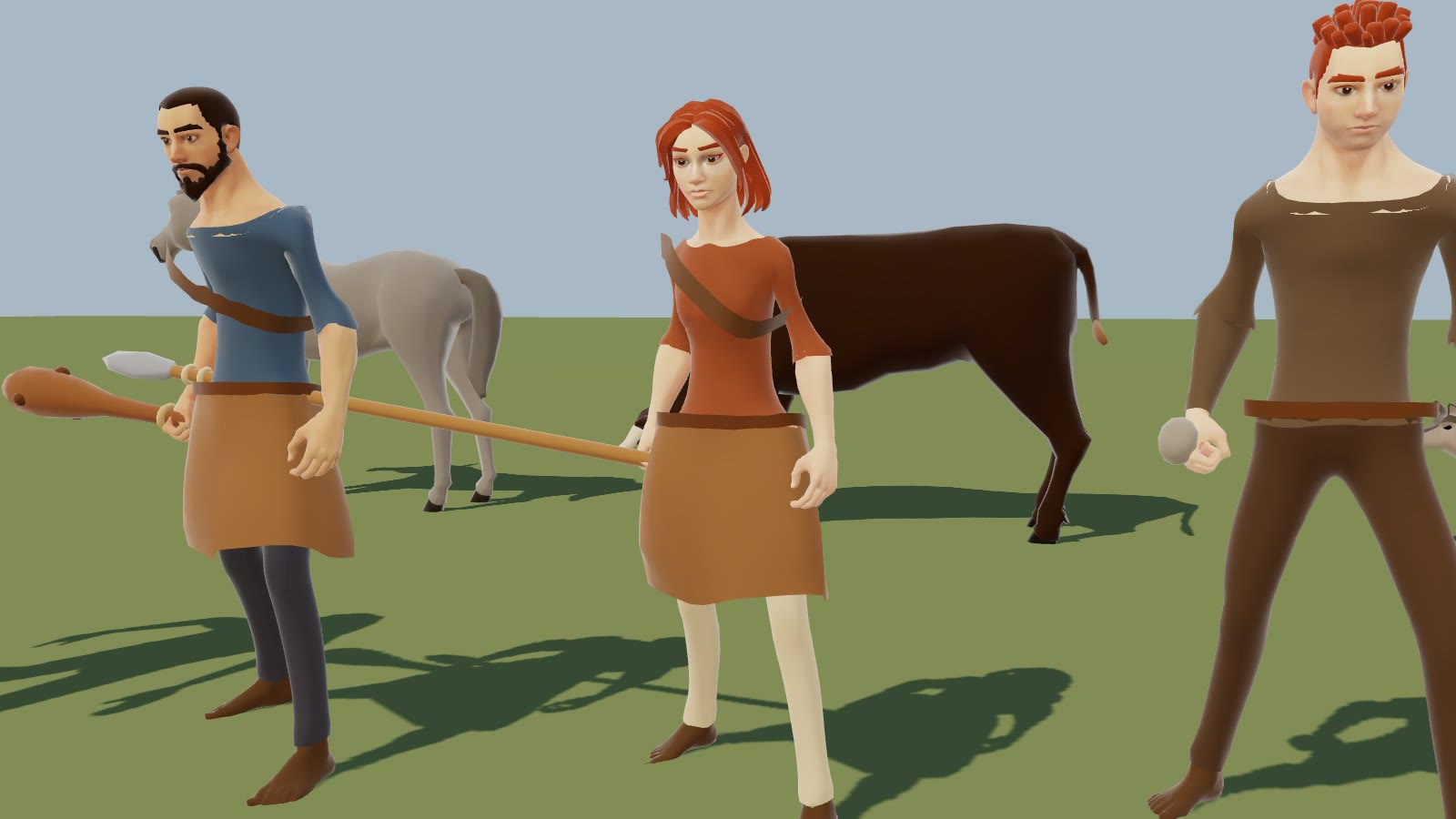
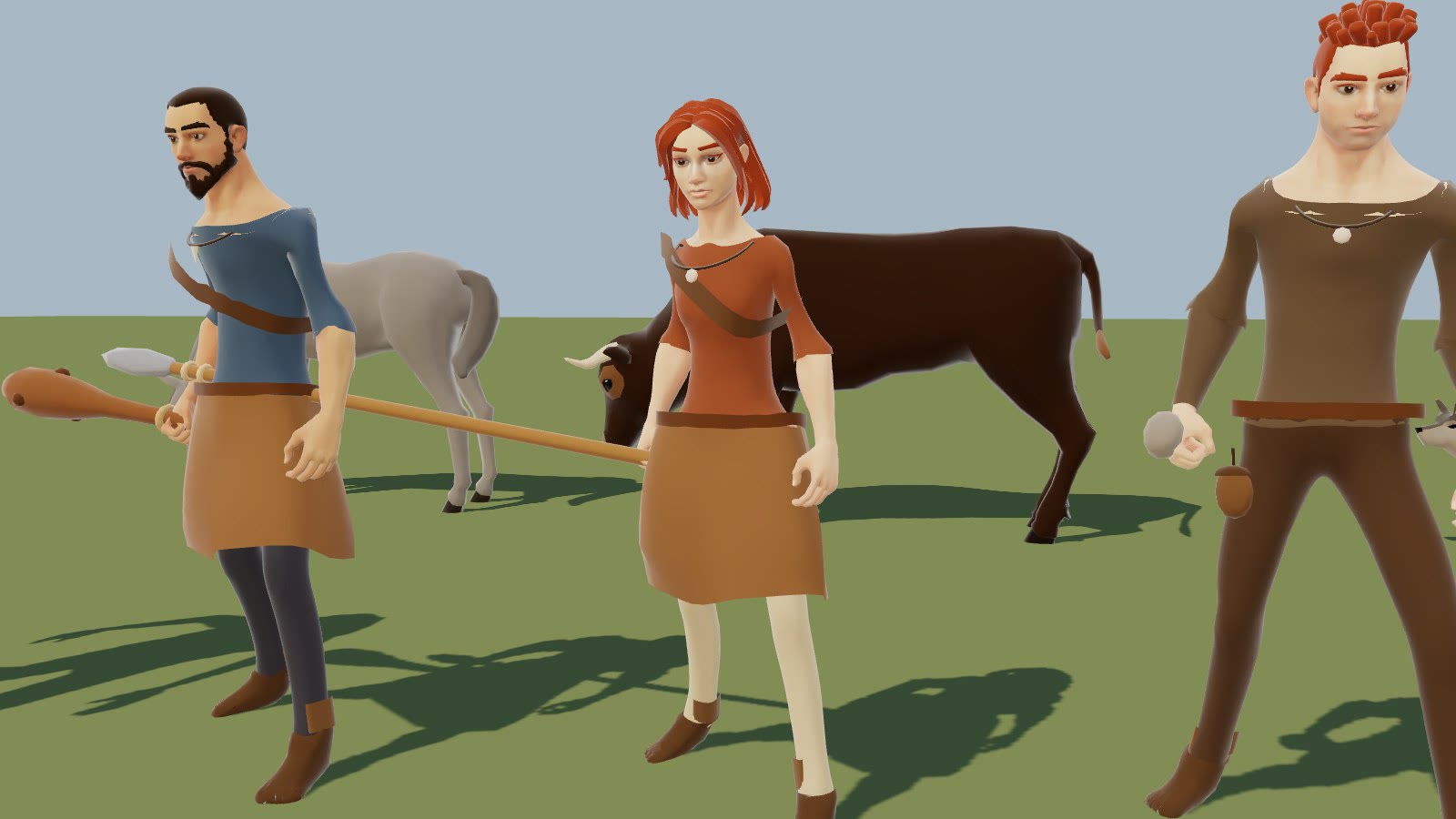
Everyone now wears hide shoes with wraps tied round the ankles. Most carry a pouch at the hip. Many wear a cord at the neck with a tooth, a shell or a few beads. Each person keeps theirs. Next come clothes by trade, so you can tell a fisher from a farmer at a glance, and a uniform for soldiers built around their realm's colour.
Winter, finished
Last week's winter forests had two loose ends. Bushes stayed bright green under laden pines, and patches of lingering snow smeared into soft streaks down slopes. Bushes now take snow like the trees around them, and drifts have clean, broken edges.
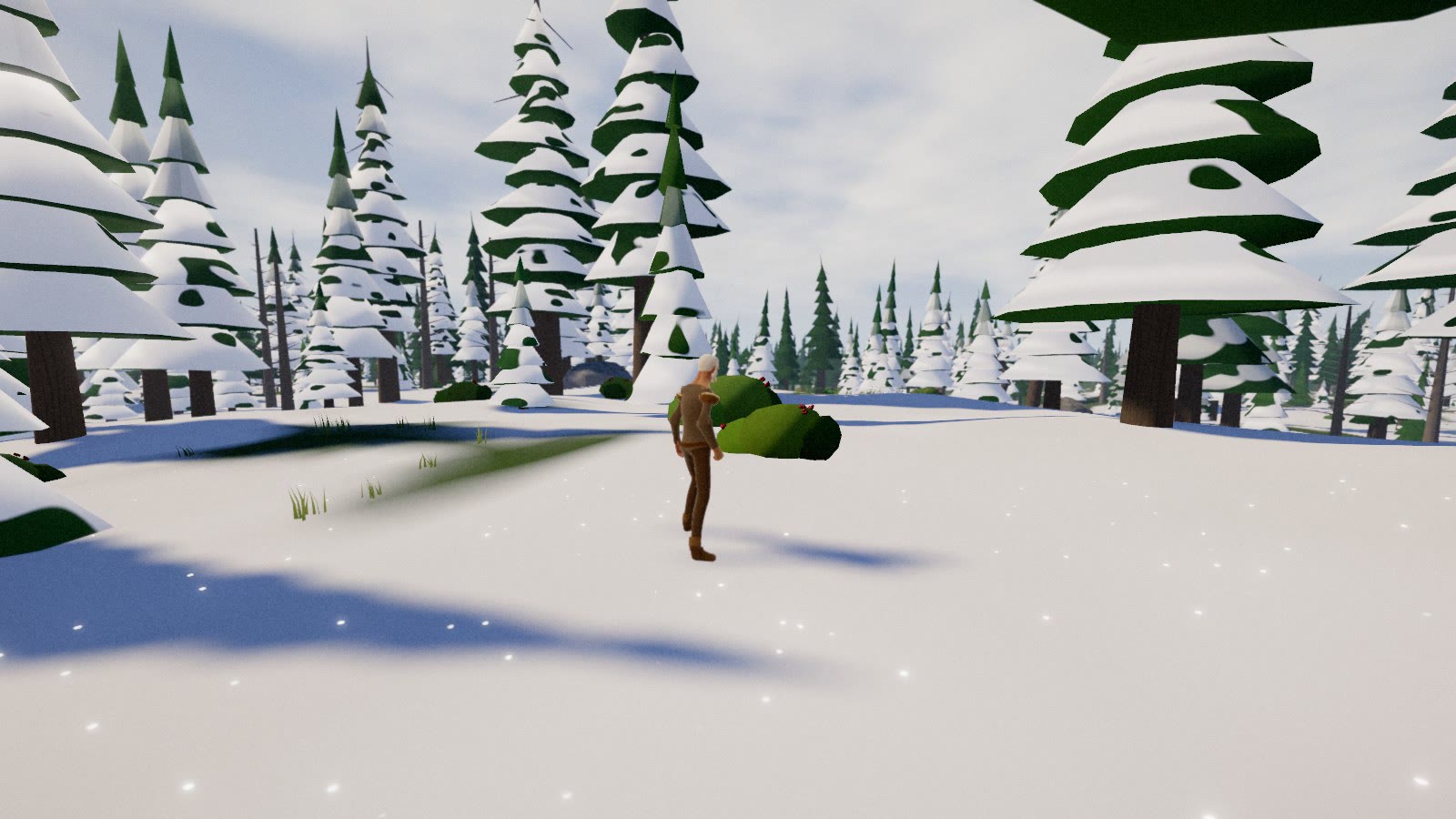
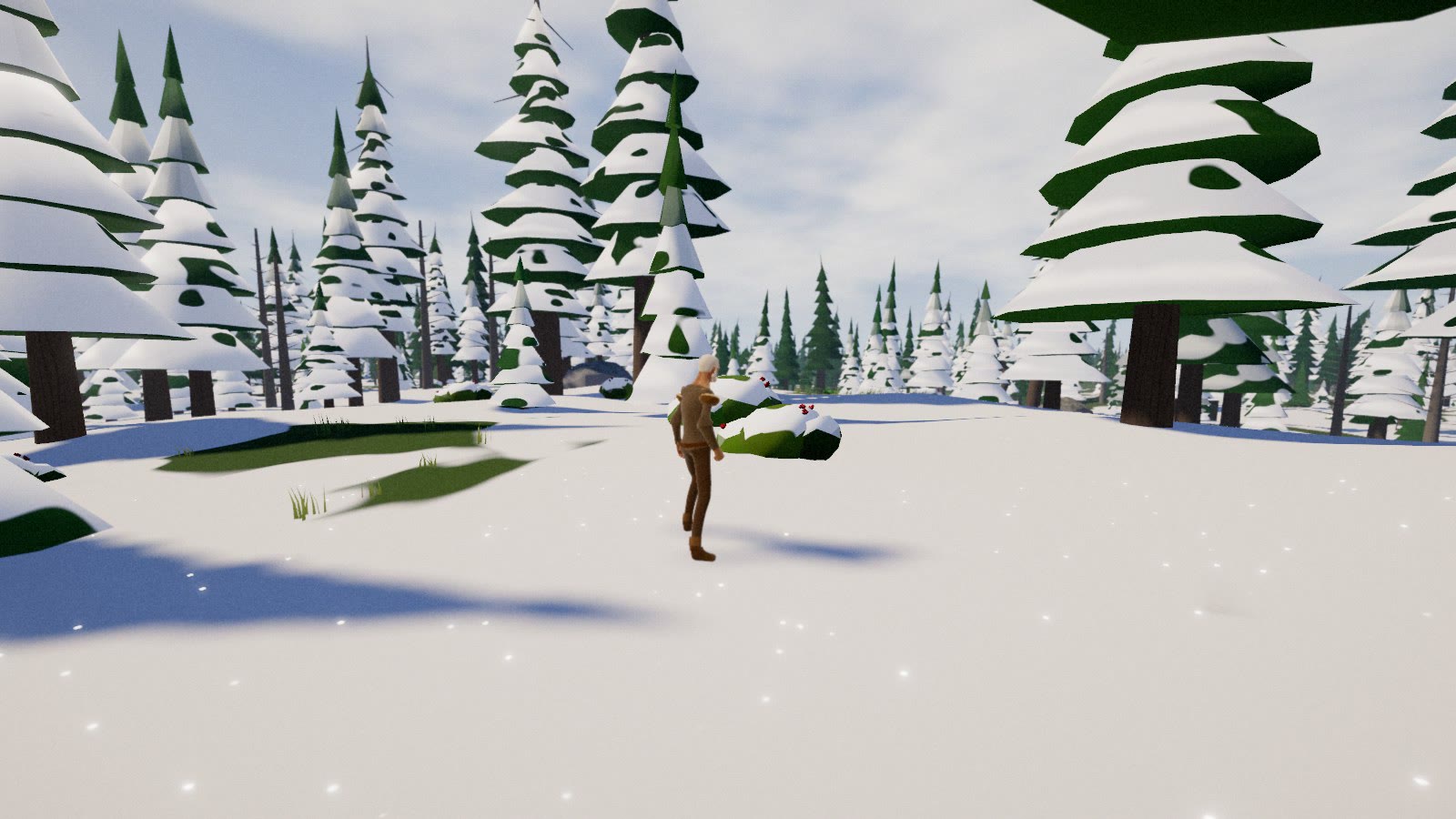
Falling snow also comes down as soft round flakes now, not small squares.
Moving with weight
We went through every pose people make, one at a time. Three needed work. When others throw, their free arm used to fling out sideways. Now it reaches toward the mark and the whole body follows through. An overhead chop now has the shoulder drawn back and the chest dropping into the blow. And in a canoe your hands close round the paddle, thumbs up the shaft, instead of twisting palm-up beside it. On horseback, your fists sit low on the reins at the edge of your view.