Second nature
Our biggest world update yet. We took the paint off, rebuilt every tree, brought winter to the mountains, put life on the beaches, and drew the map in relief.
This is the biggest change to the world since we started. It touches nearly everything you see: the light, the trees, the ground, the water, the far horizon and the map. Here's what changed and, more importantly, why.
Taking the paint off
Two weeks ago we gave the world a painted look. A filter turned every frame into brush strokes, the trees were drawn as clusters of brush dabs, and the ground was covered in strokes that followed the slope. Screenshots looked striking. Playing in it, we kept running into the same problems.
The filter worked at half resolution, so everything looked a little soft and distant land lost its detail. The dab trees read as flat cards up close. The strokes on the ground added noise everywhere you looked. And the painted clouds didn't match the rest of the sky.
We went back to what we actually wanted: painterly means simplified shape and light, never visible brushwork or screen filters. So we kept the part of the paint that was working, the soft banded light with warm sun and cool shade, and removed everything else. Edges are sharp again, trees are solid shapes, the ground has broad patches of light and colour instead of strokes, and the sky uses one consistent style of cloud.
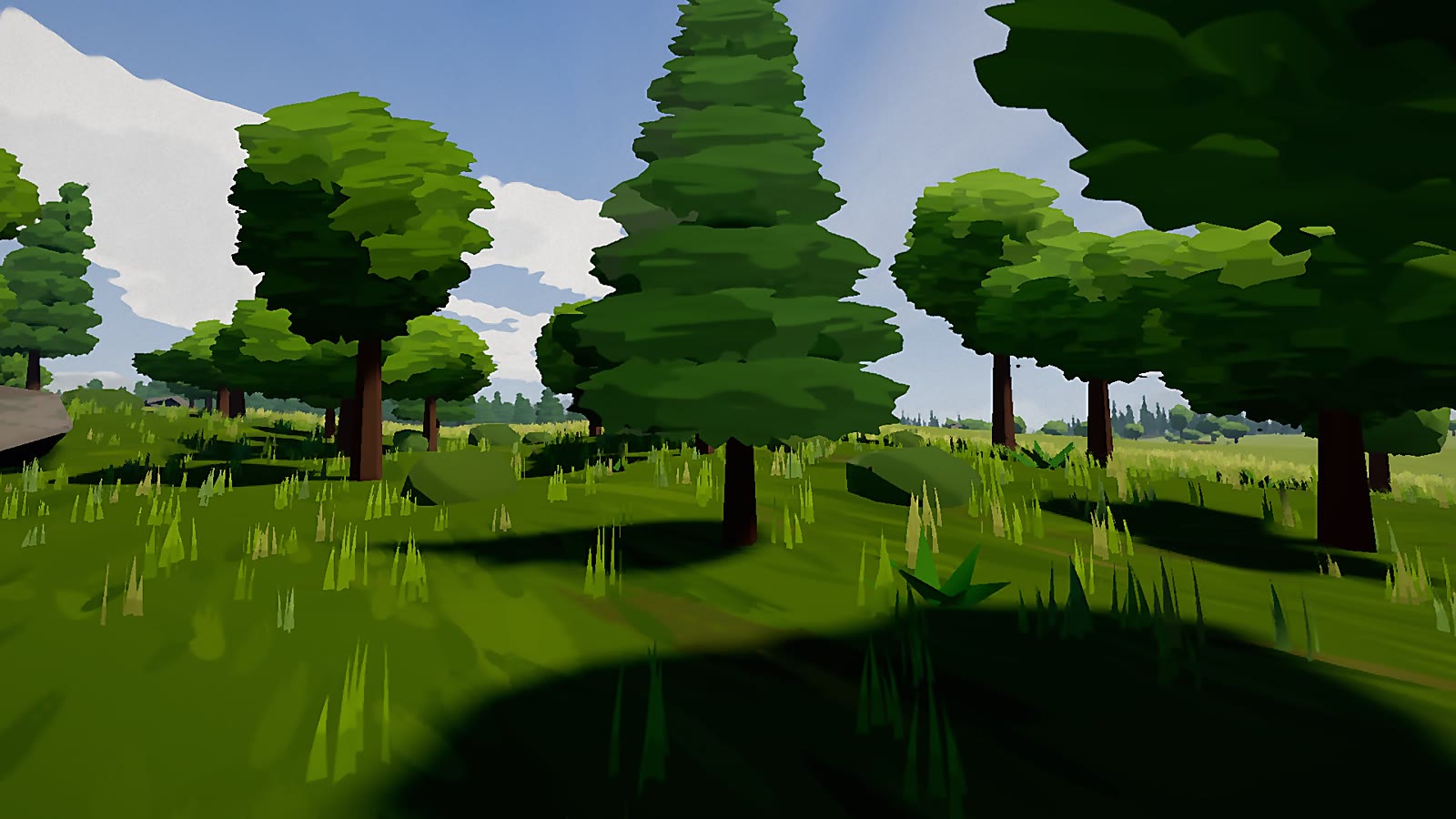
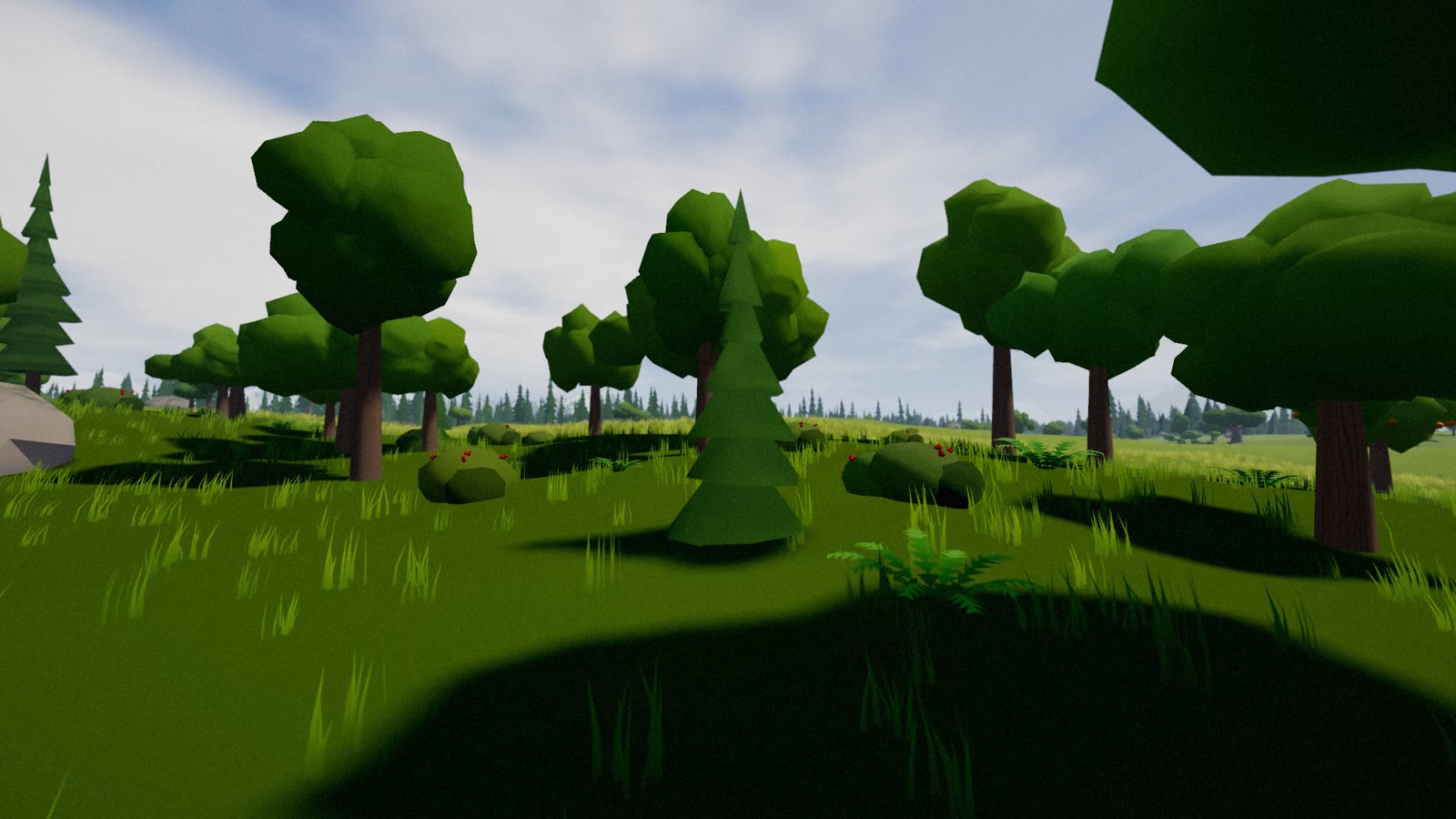
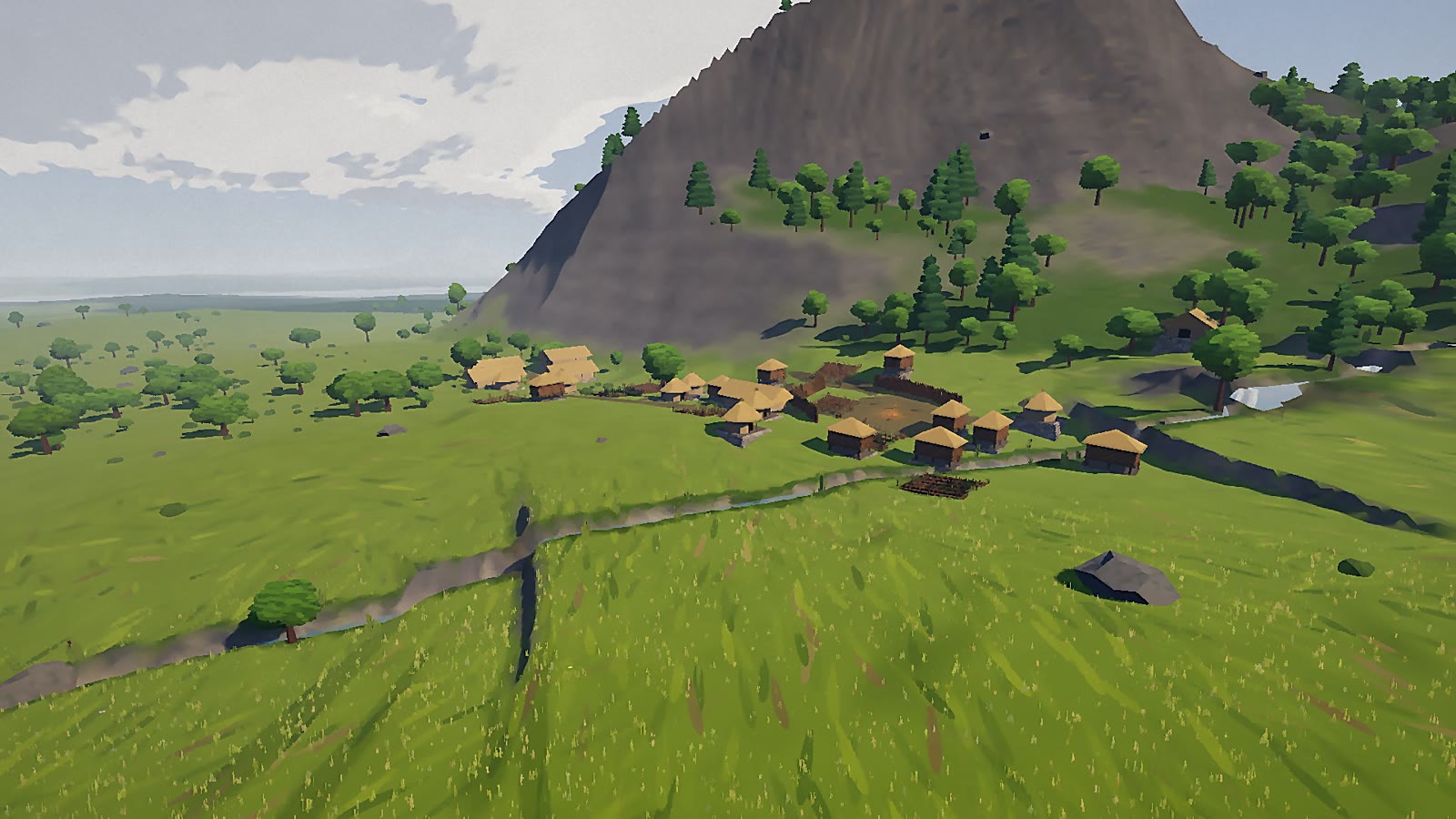
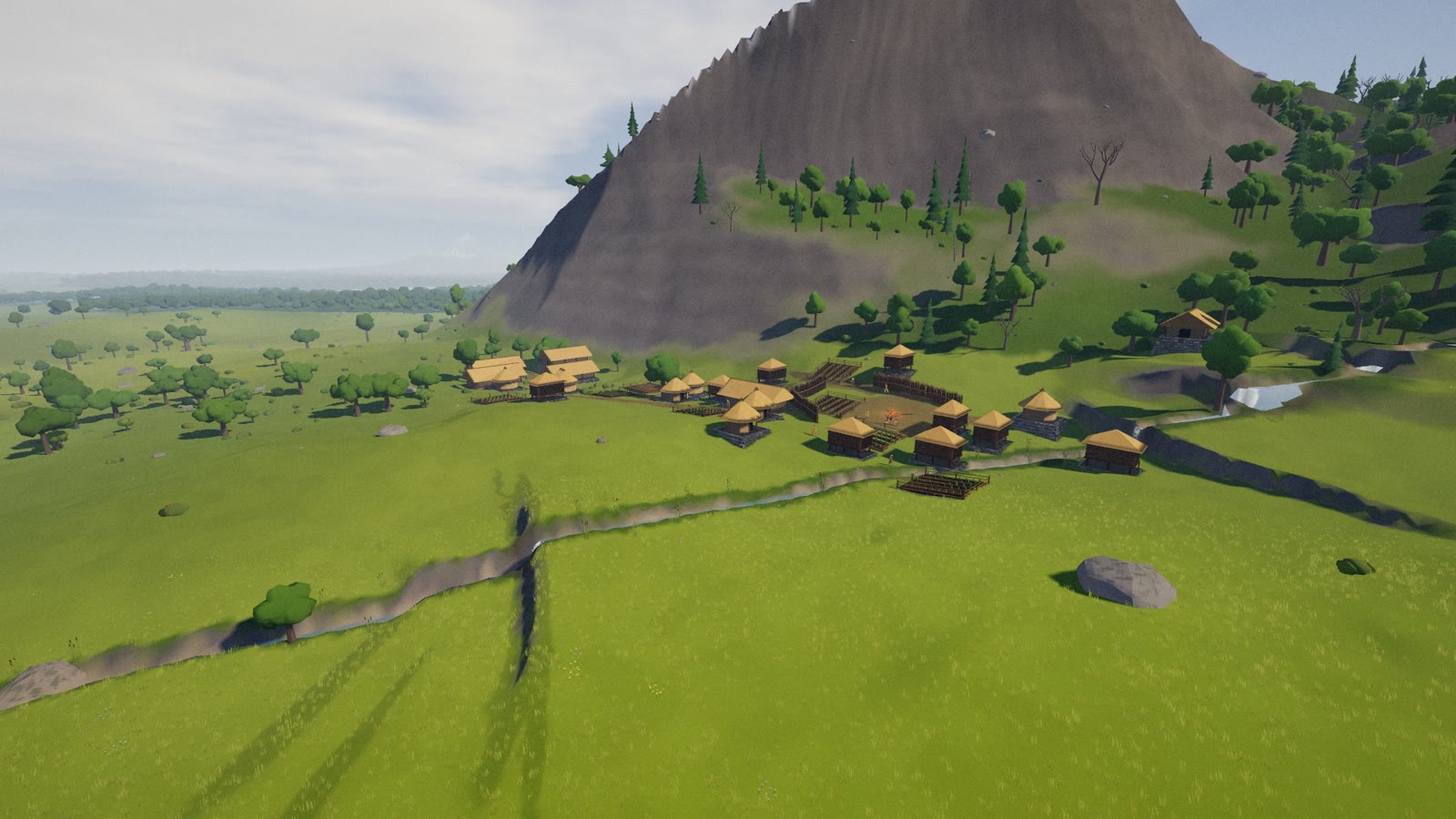
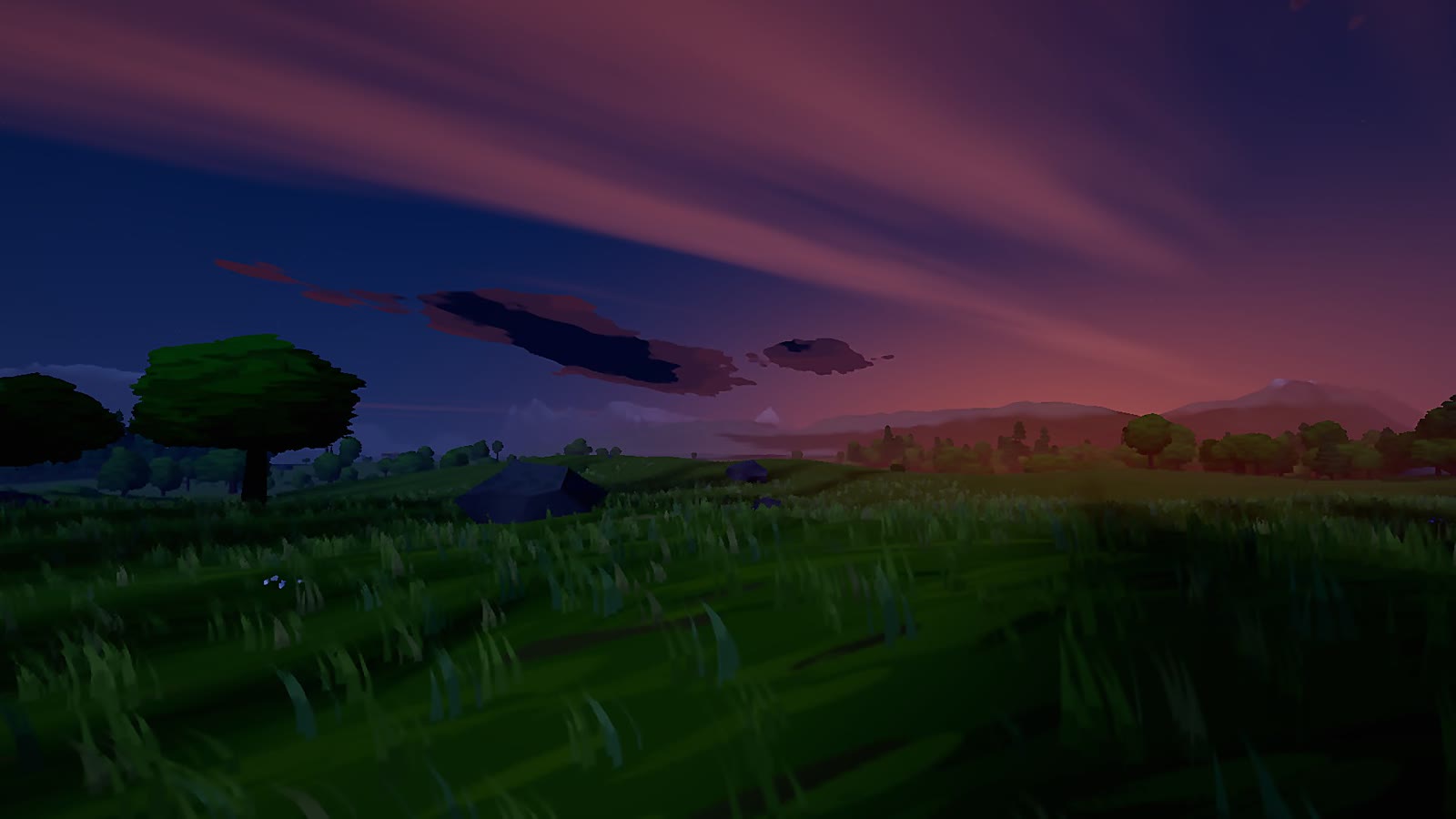
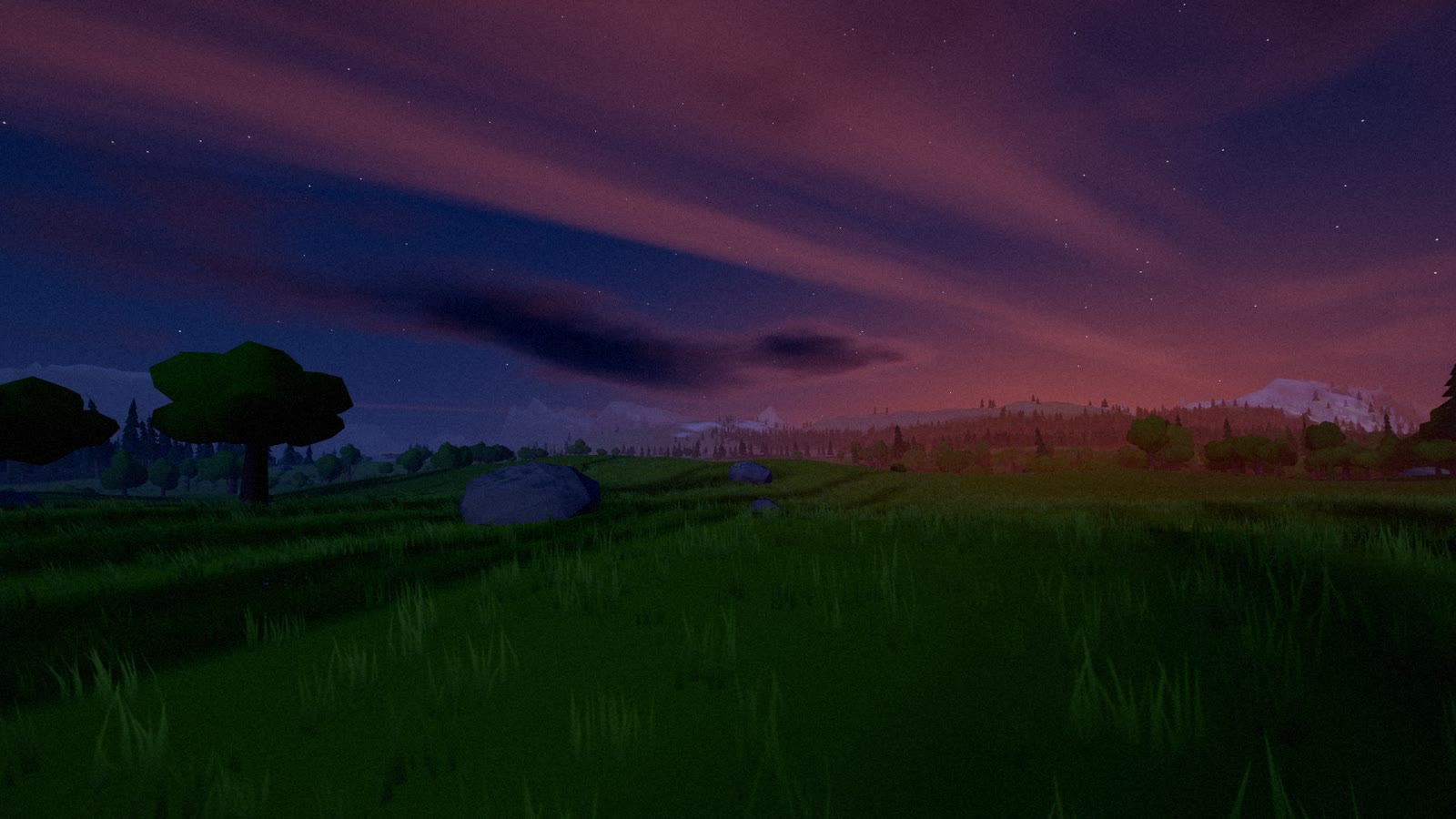
The new look costs about one millisecond more per frame than the painted one at 1440p, almost all of it for smoother edges. We think that's the right trade.
Every tree, rebuilt
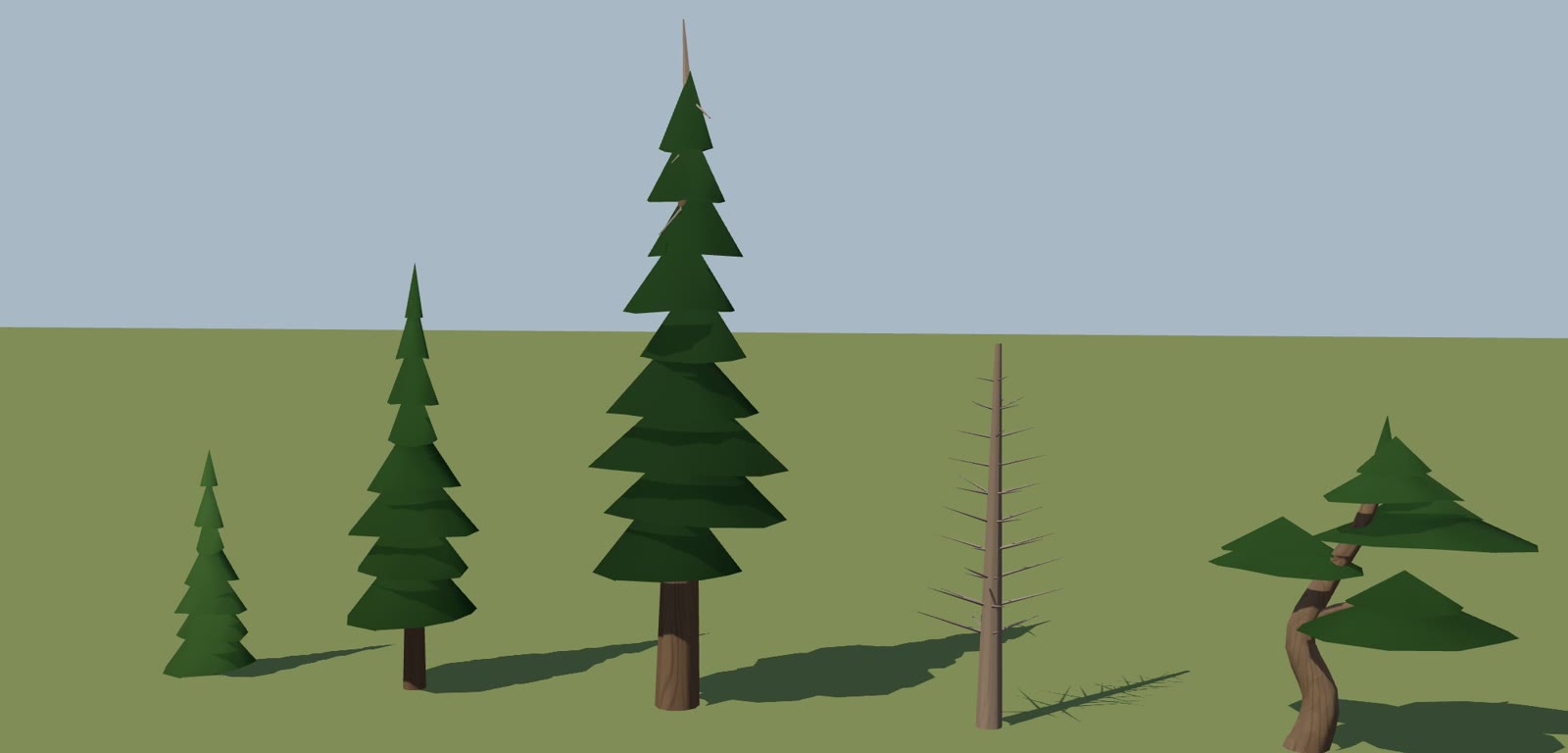
We started by putting every tree in the game side by side and looking hard at each one. Only one pine shape really worked, the simple spruce, so every pine is now built from it. They vary by age instead: young and dense, grown, ancient (big, ragged, with dead branches and a broken top), dead, and a stocky, wind-twisted pine for high ground.
Broadleaf trees keep their shapes, but each crown is now one green, and each tree differs slightly from its neighbours. New kinds give places their own character: rare giant oaks that only grow where they have room, acacias across the savanna, birch groves in damp forest, and fan palms at desert oases.
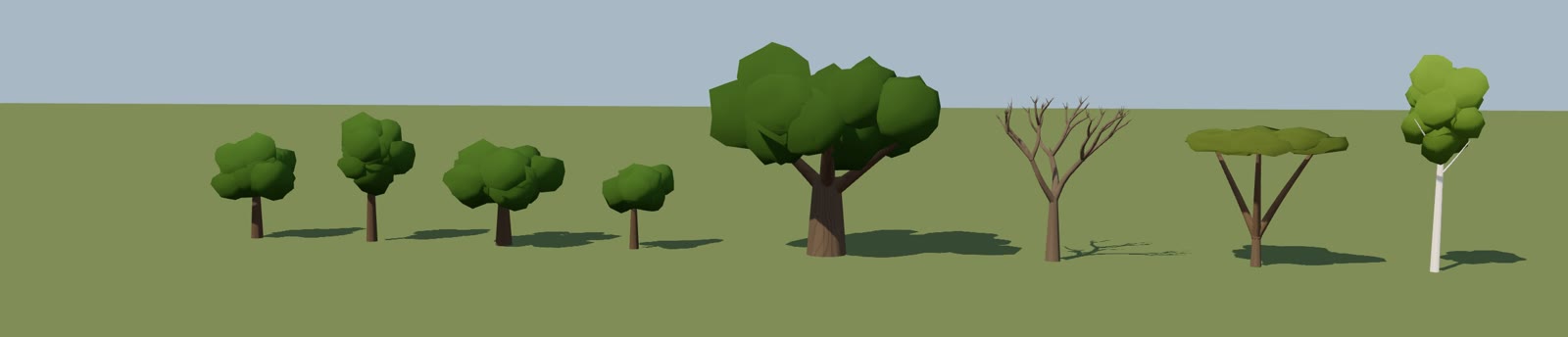
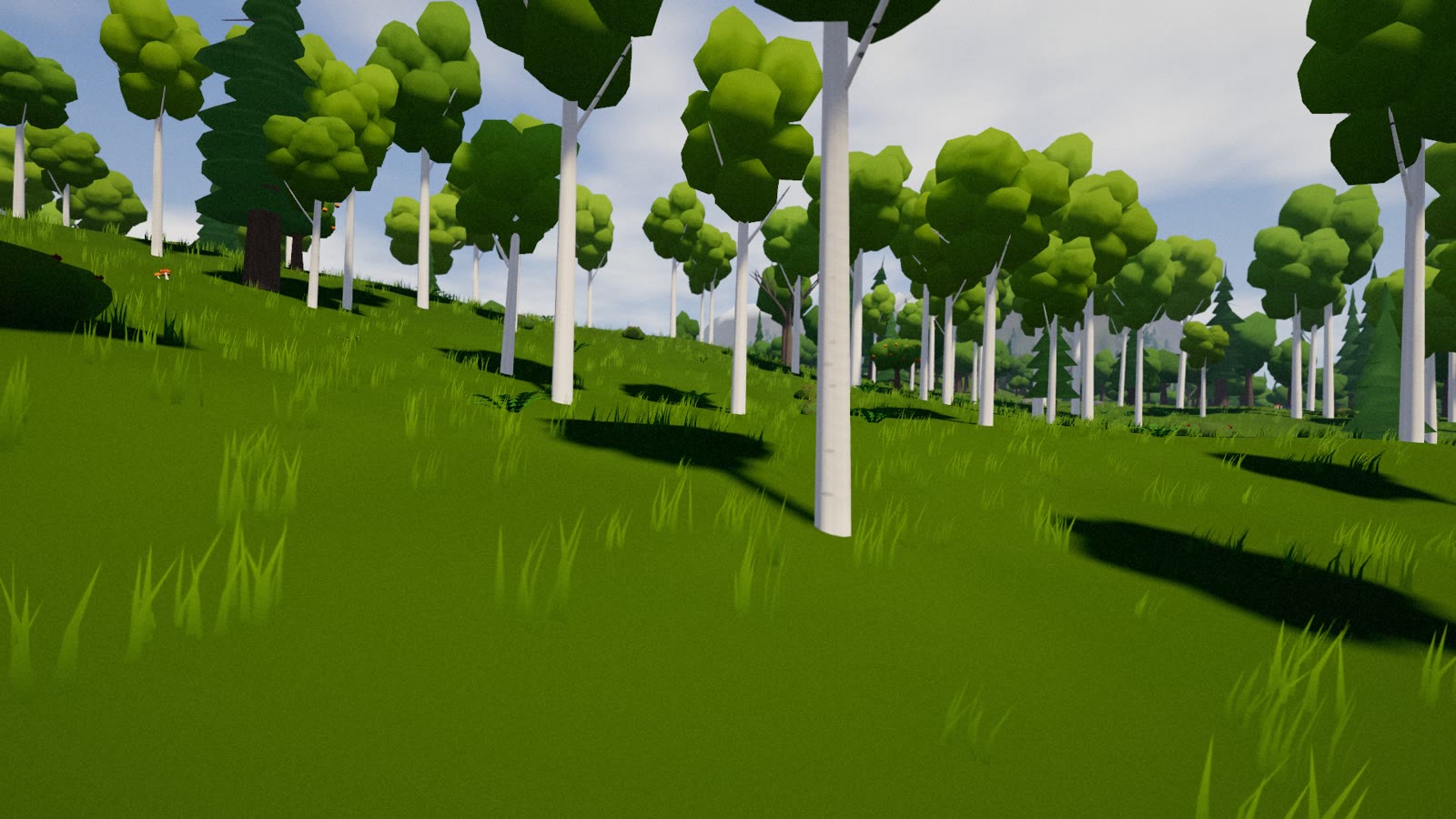
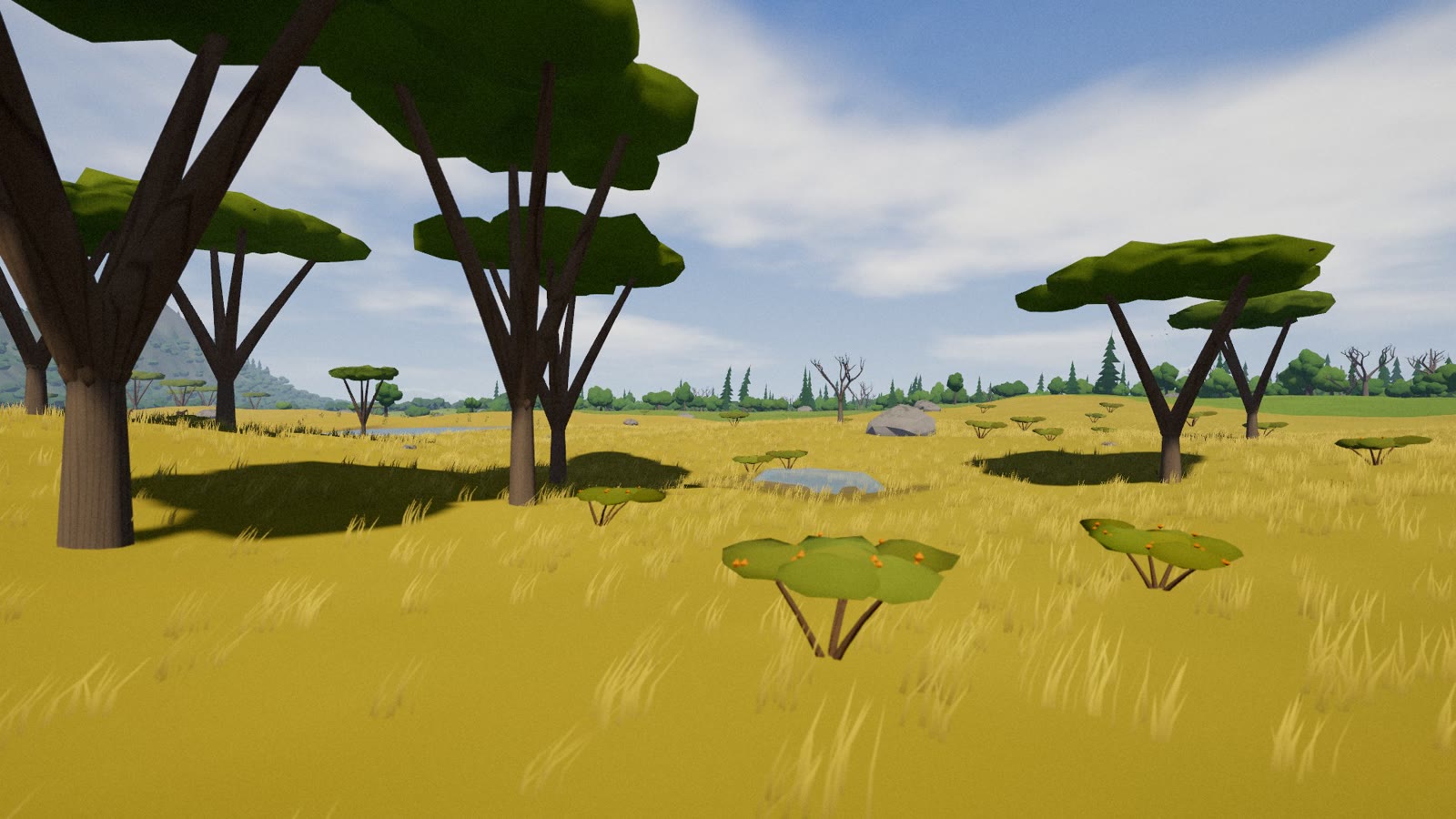
Trunks are round now, with subtle wavy lines for bark, and branches match their trunks. Every kind of tree leaves its own stump when you cut it down.

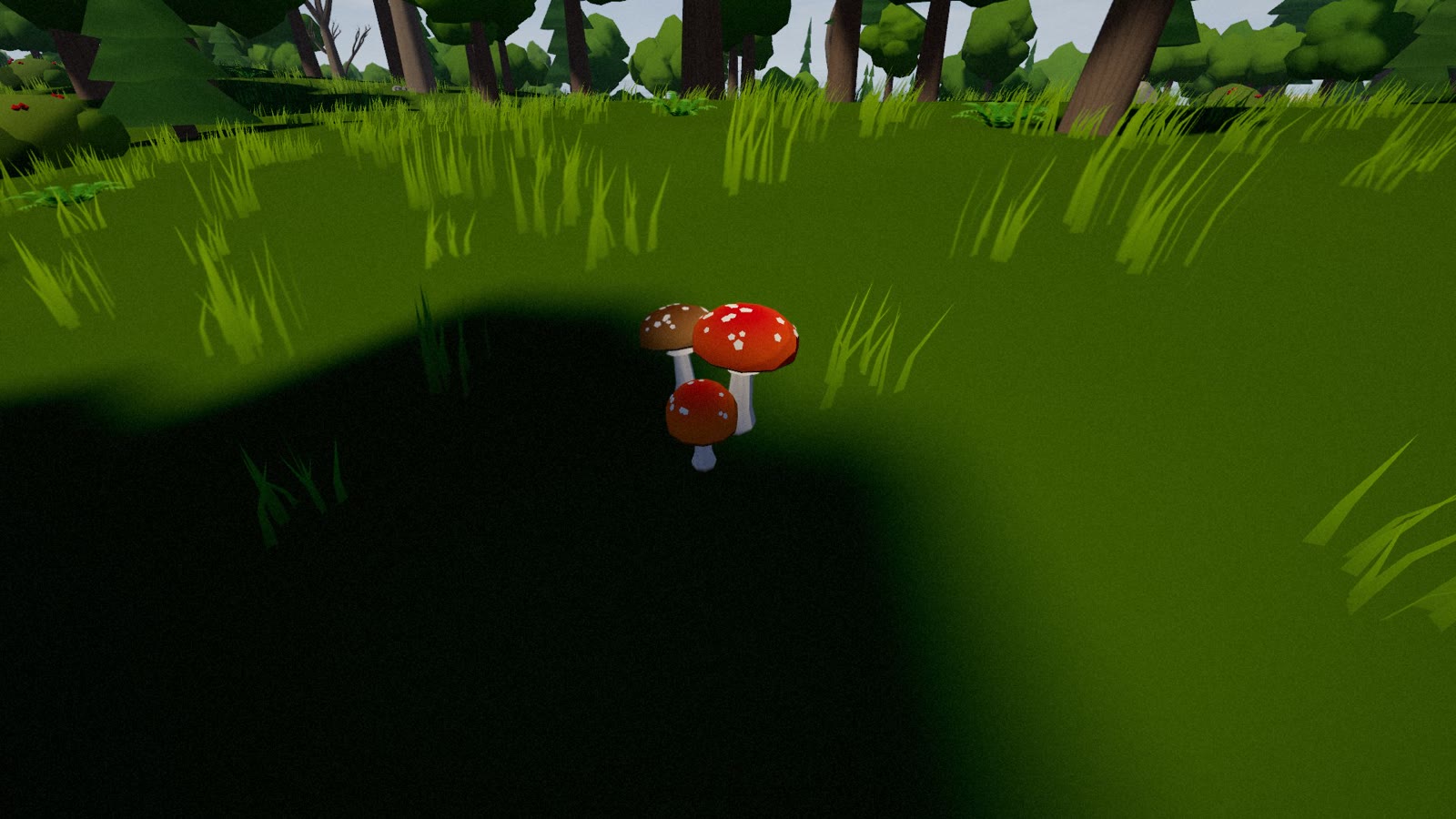
Mushrooms, ferns, reeds, flowers, rocks and fruit trees were all rebuilt too: several of them had been distorted by random noise until they read as shards.
Every land its own plants
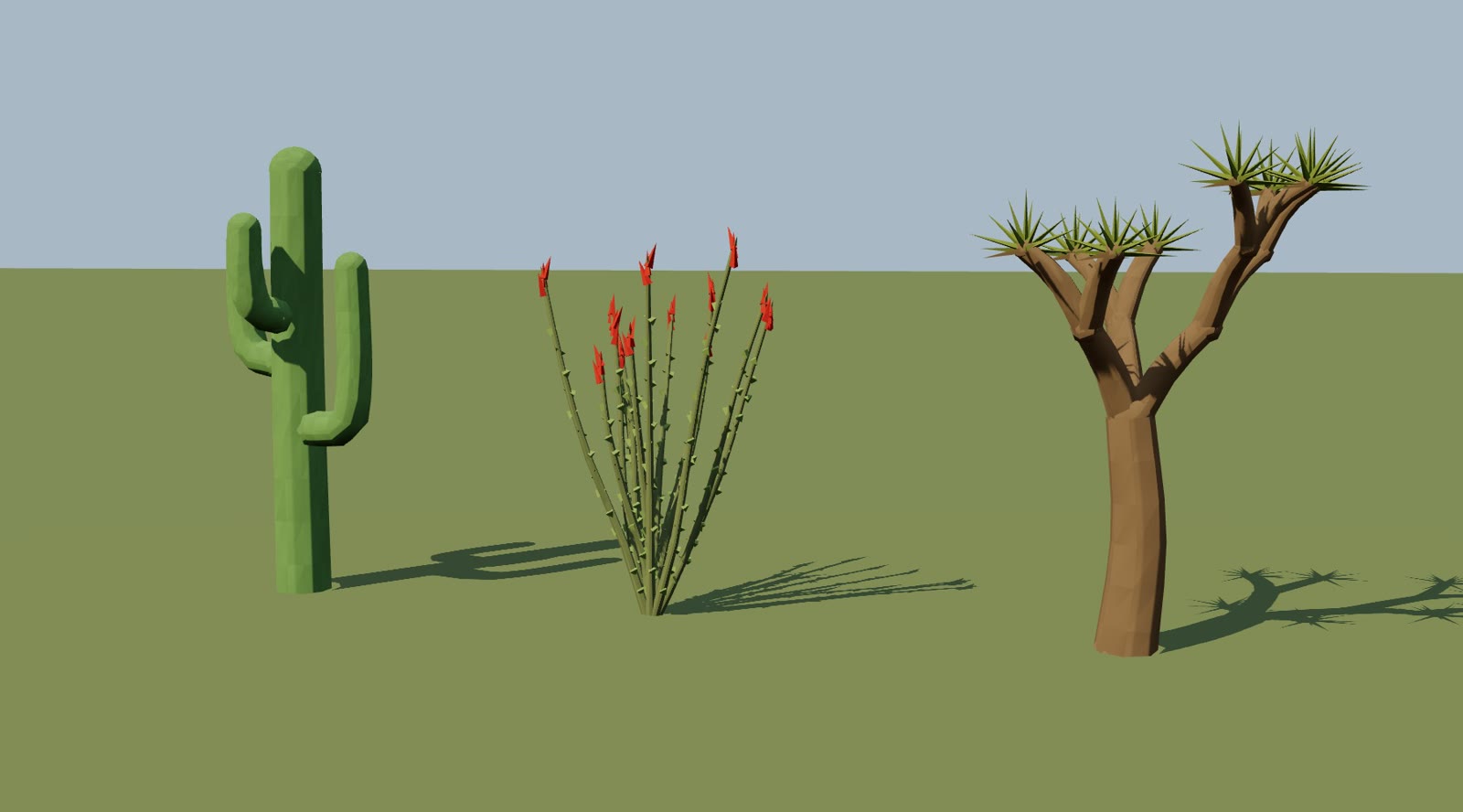
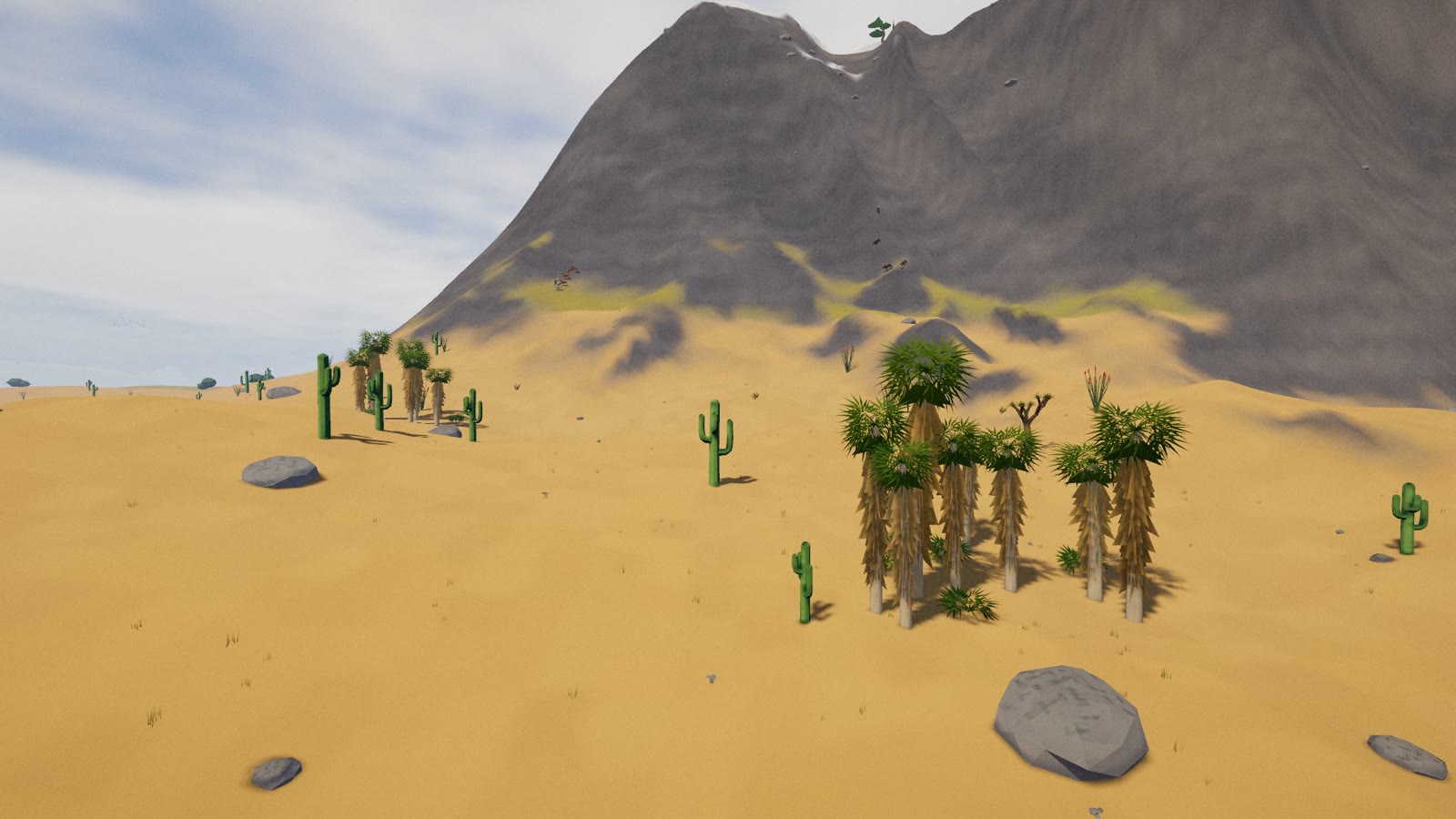
Before this update, every biome drew from the same few plants. Now the desert grows saguaro, ocotillo and the odd Joshua tree. New worlds can have palm oases: tight groves of fan palms in desert valleys and by desert water. Bushes differ by land too, and each kind has its own fruit to pick.
Winter in the mountains
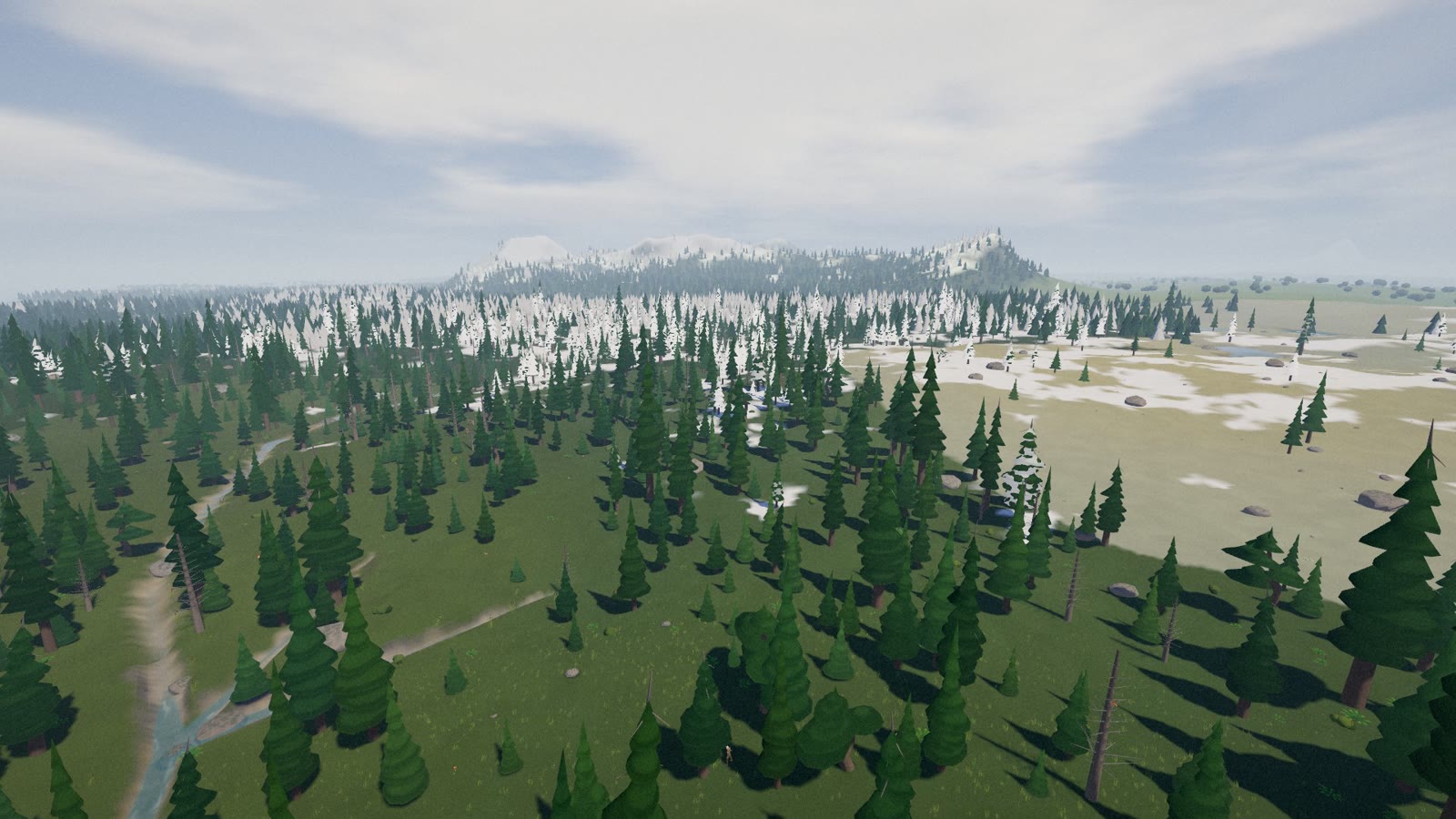
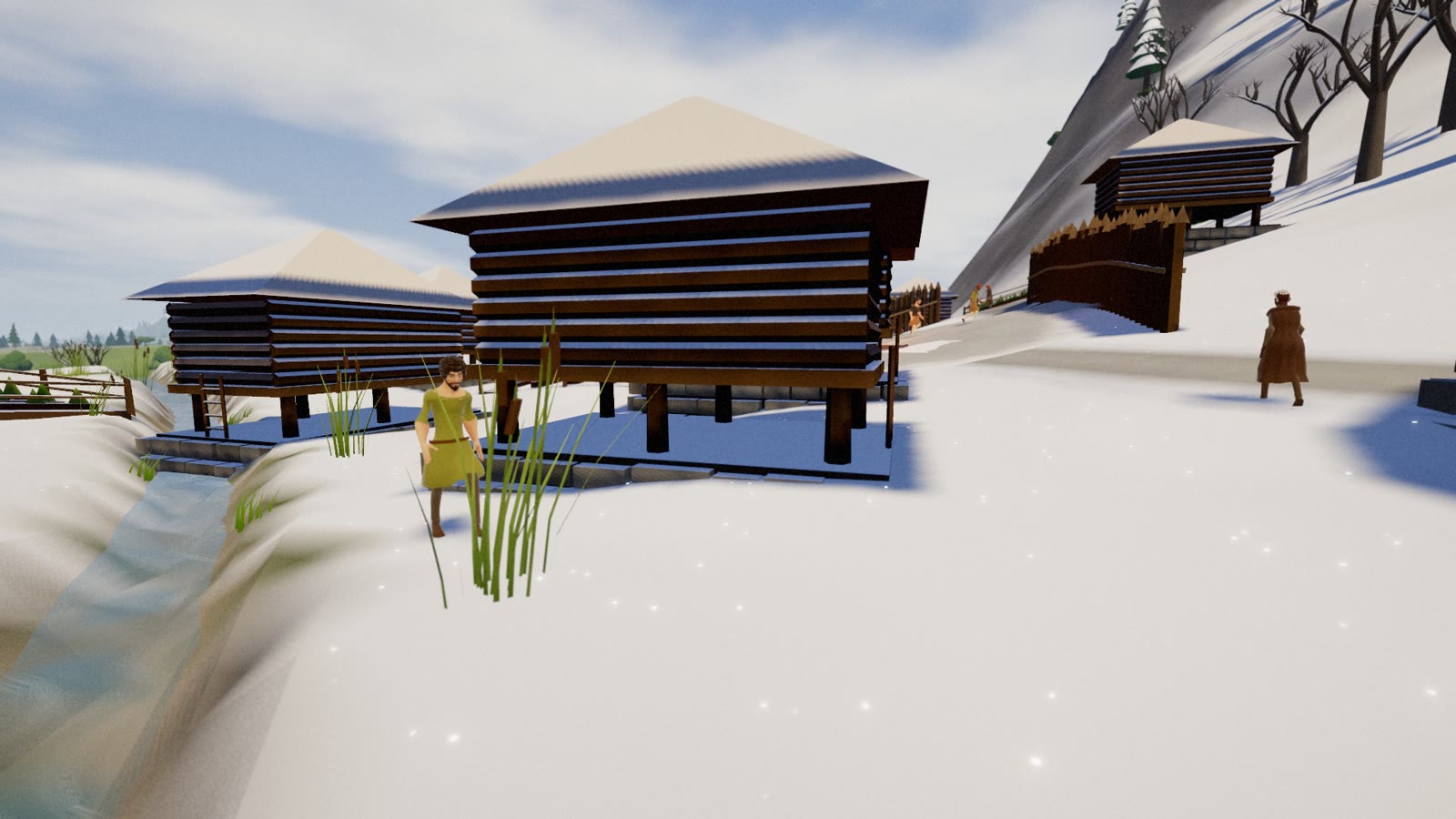
Snow used to mean a white mountaintop and nothing else. Now there are winter forests: broad regions in the cold foothills under the mountain ranges, where snow has settled in, pines are laden, and broadleaf trees stand bare. We were careful with the edges. Snow arrives as small drifts that grow and join, so you walk from green forest into winter without crossing a line.
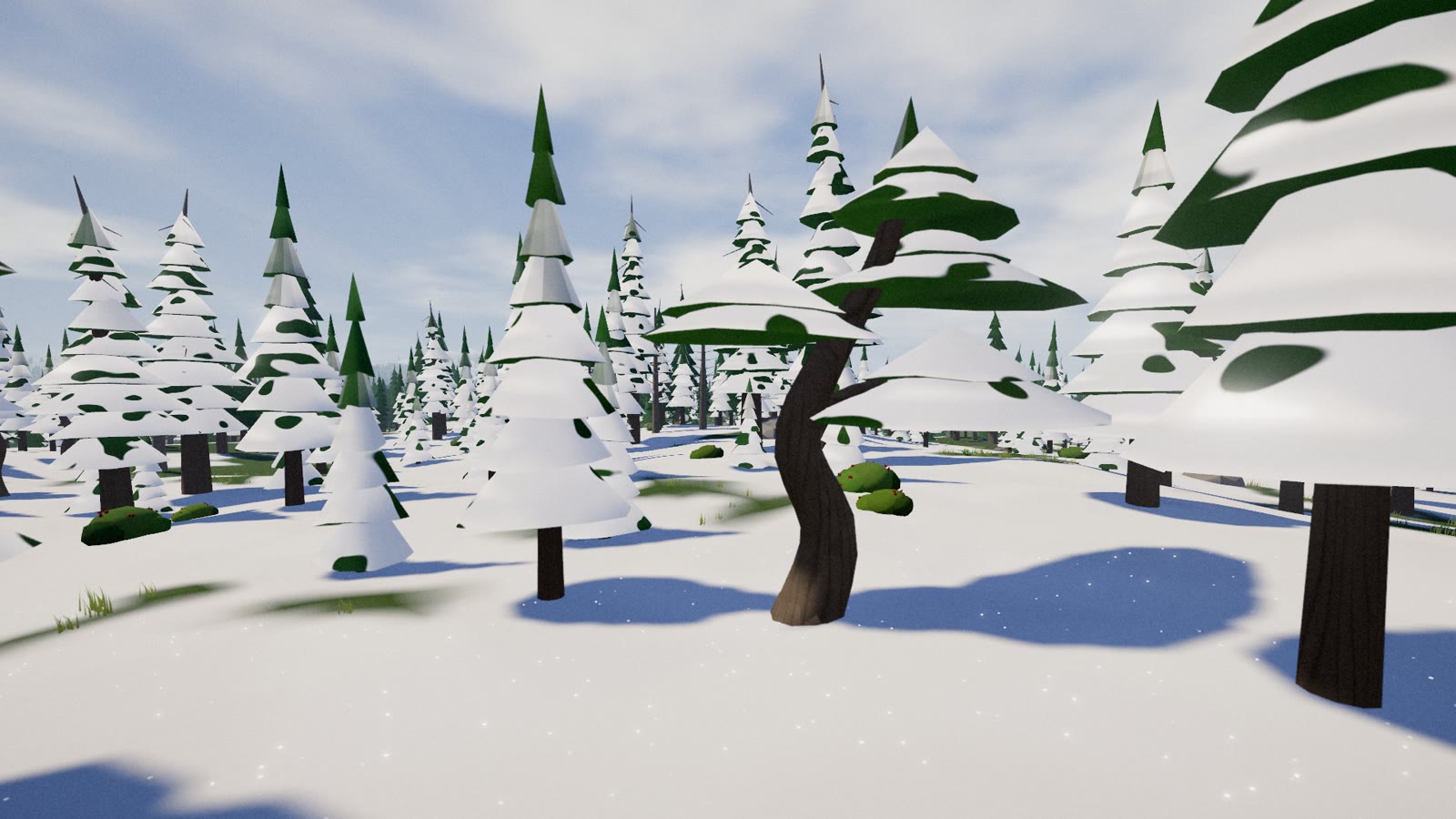
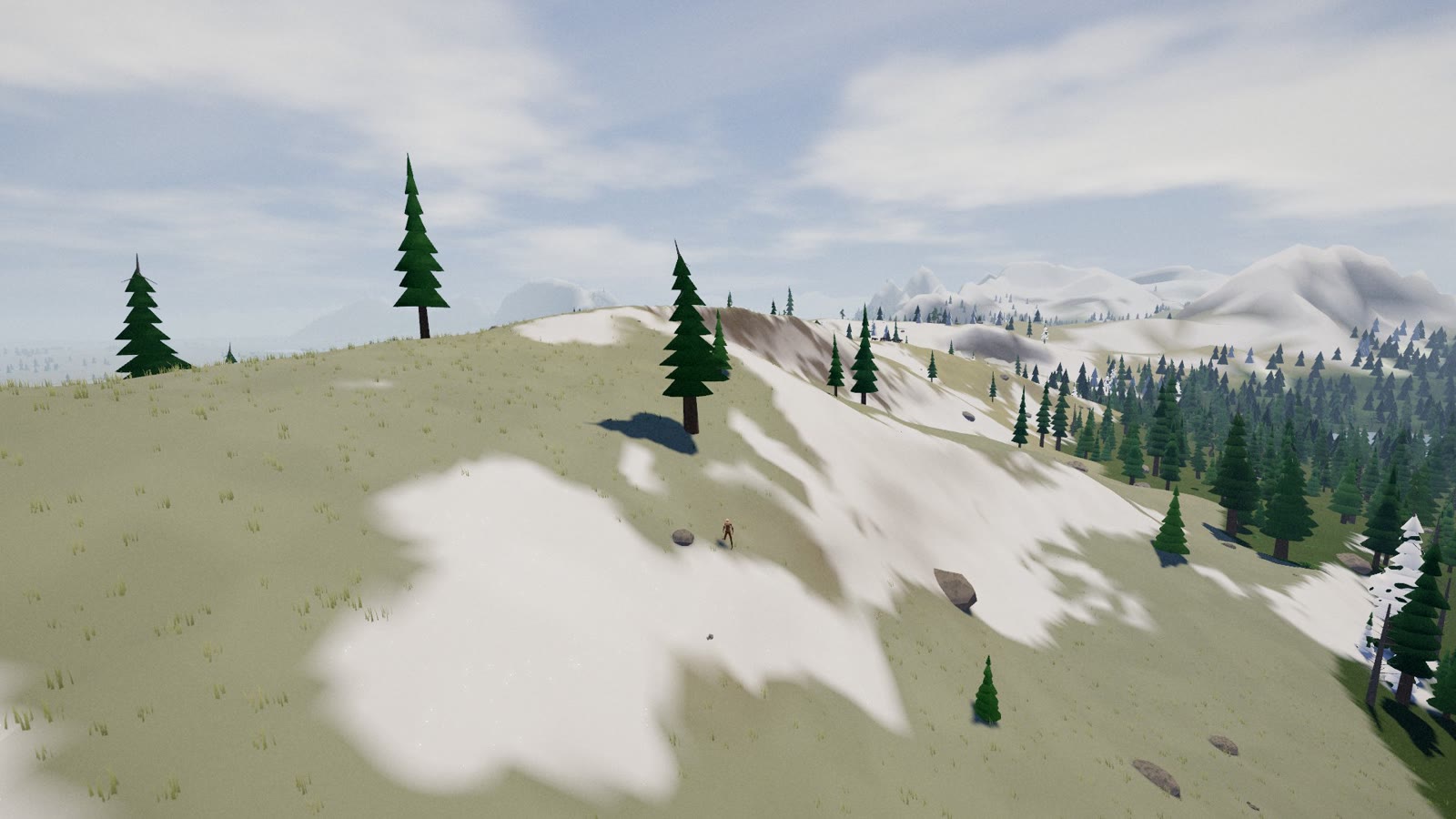
Elsewhere, lighter snow lingers on cold north-facing slopes, where the sun doesn't reach. Trees only carry snow where the ground under them does. Settlements in snowy places get snow on their roofs, and snow banks along the roads. Snow also sparkles a little when the sun catches it.
Life on the shore
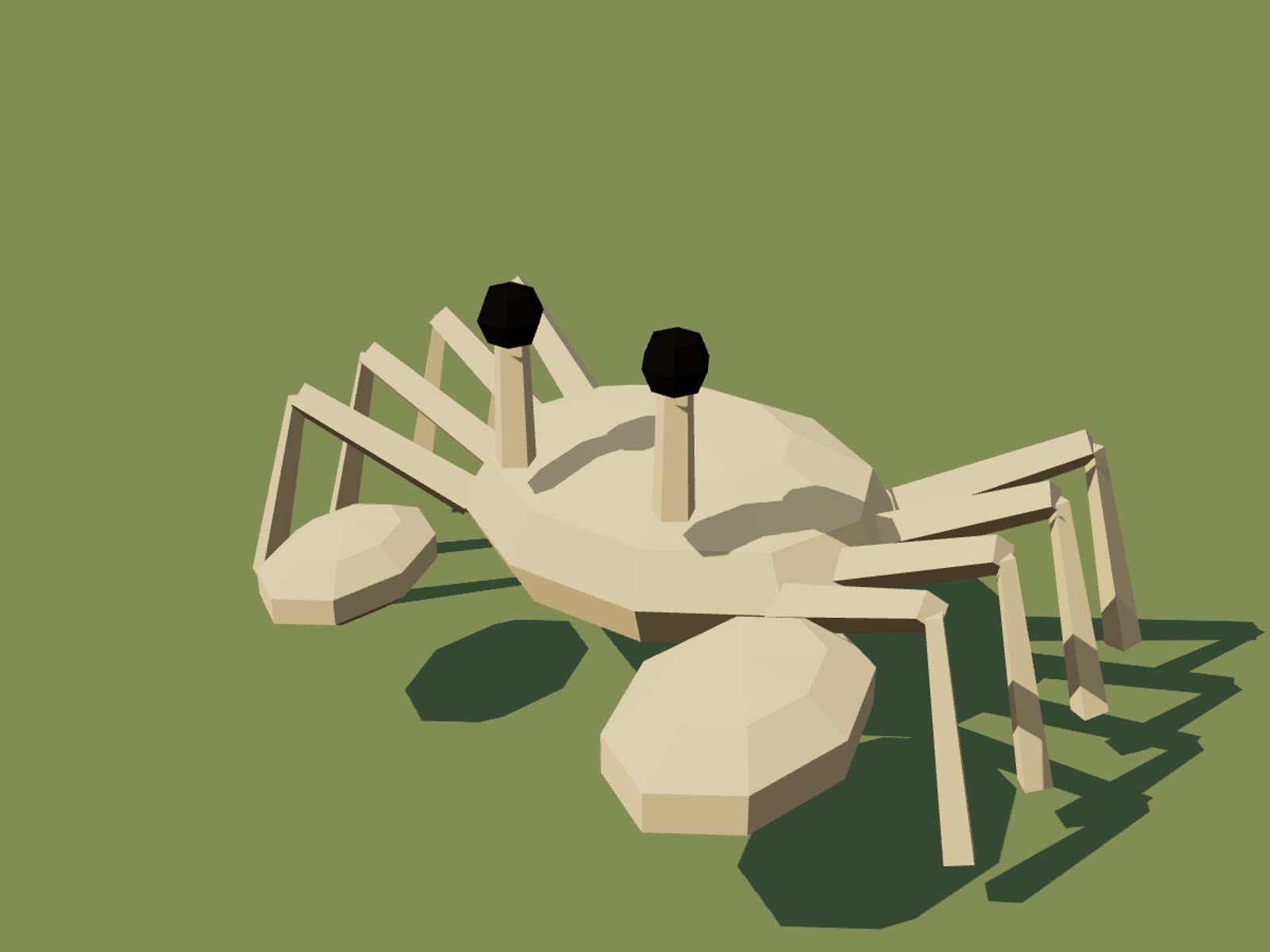
Beaches were empty. Now ghost crabs scuttle across the sand and run when you get close. Herons wade in the shallows and fly off on slow wingbeats as you approach. Flocks of shorebirds work the tideline, lift off together when you come near, and settle again further down the beach.
The view from the top
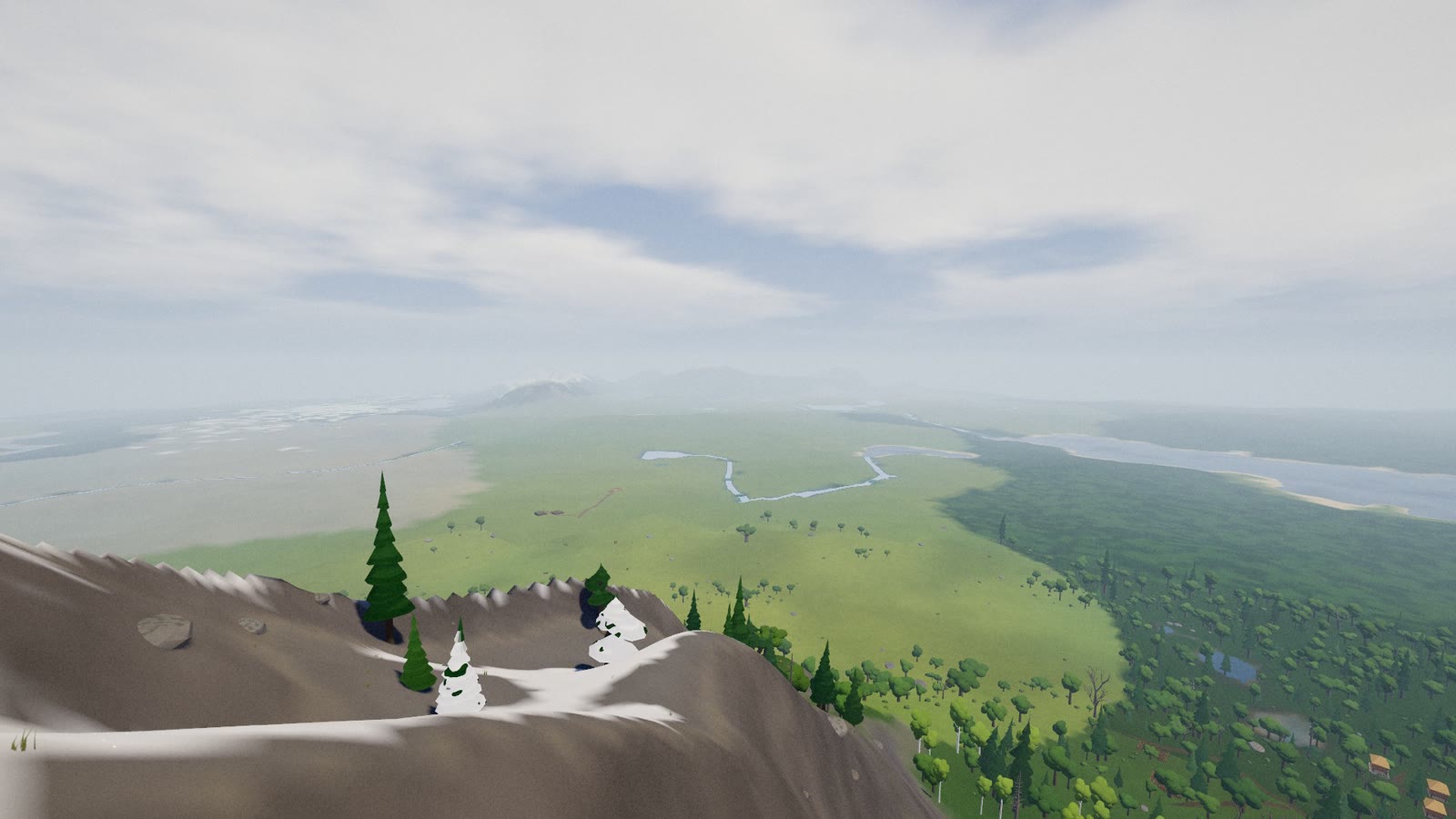
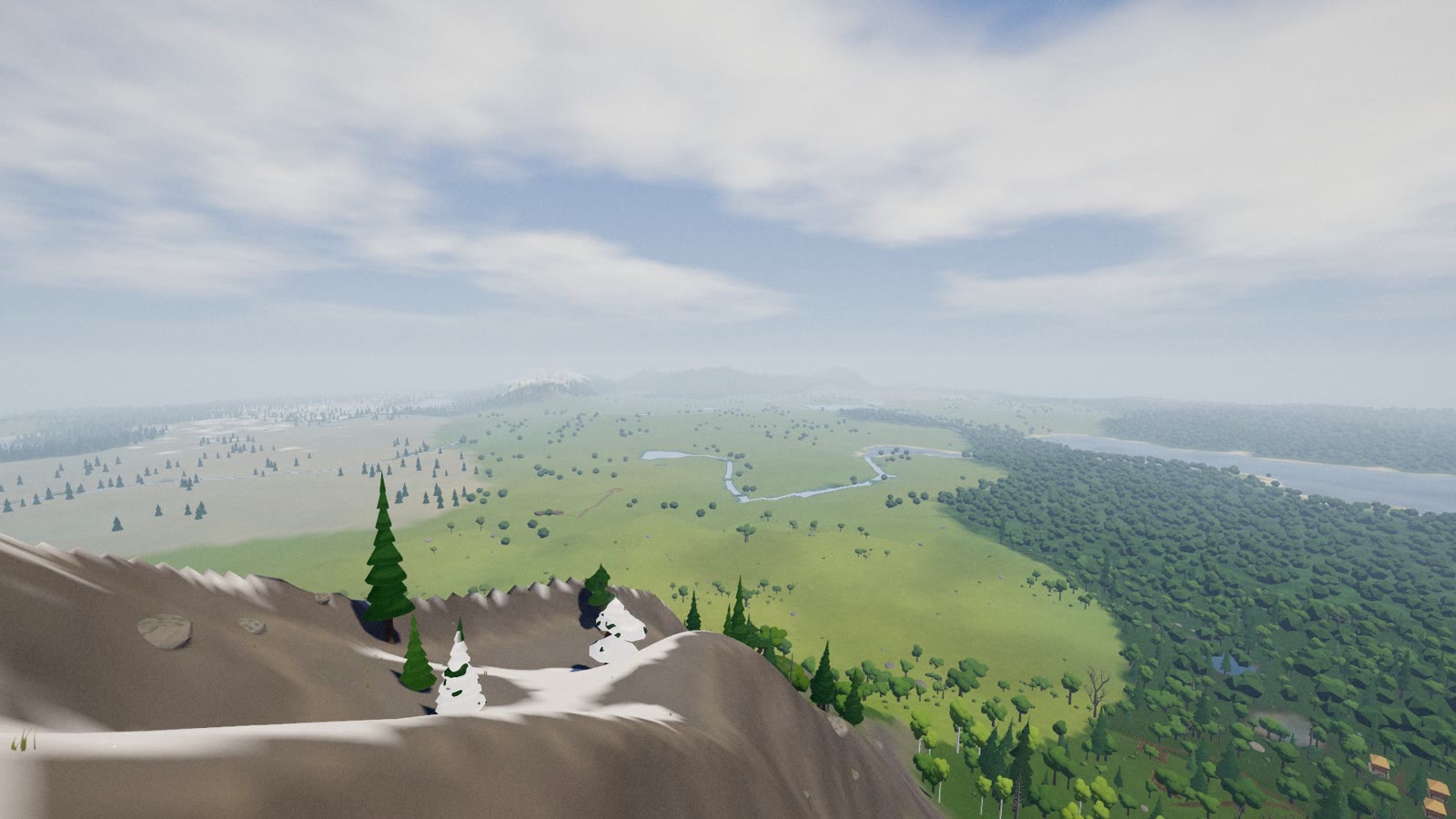
Standing on a mountain and looking out over the land is one of the best moments in the game, and the far view was where the world felt thinnest. Past about 400 m there were no trees at all, just a green floor.
Now distant forests are drawn tree by tree, out to about 2.6 km, using very simple shapes. Lakes far away reflect the sky the way nearby water does, and a hard shadow edge that used to cut across views from high ground is gone. All of this adds almost nothing to the frame time.
A map worth looking at
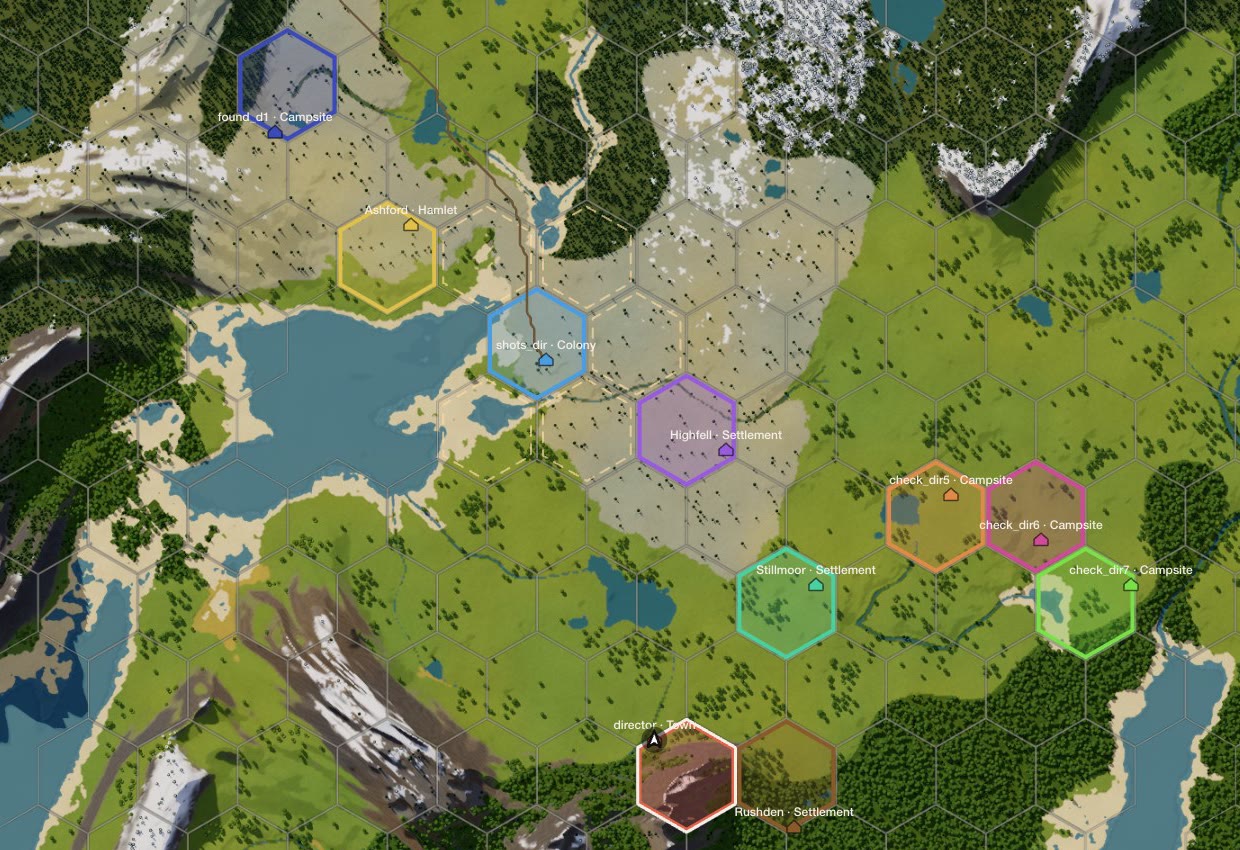
The map is now drawn in relief: the whole world seen from straight above, with every tree, snowfield and river, lit by a low sun so mountains stand up from the land. It's drawn once when you first enter a world, and the minimap uses it too. All the map's tools work on top as before.
Roads
Roads and village streets used to be flat, textureless strips that ended in a straight cut. Now they're trodden earth with small stones, they fray into the grass at their edges, and they taper out instead of stopping dead.
Under the hood
A world with this much more in it has to stay fast. Small plants like flowers, ferns and berries are now only drawn within 150 m, where you can actually see them. A frame in the forest used to draw about three million triangles of tiny plants out to 400 m. After that pass, the new look runs within about a millisecond of the old one everywhere we measured, and the far trees, map and snow come almost for free.
If you've played before, the world will look different the moment you log in. We hope it feels more like a place.