Clear water
Our water looked like painted plastic. Four passes in one afternoon, and what each one taught us.
Water is one of the first things people notice in an open world, and ours was letting the world down. Lakes had corrugated stripes, rivers were dull slate, and the sea simply stopped at the sand. We gave it an afternoon and reviewed it in rounds, comparing each one to the last. Here's where it landed, and what each pass taught us.
Clarity is the cue
The old water took its color from distance. Now it takes it from depth: almost clear over the first meter and a half, with a damp sand-and-pebble bed showing through, turning greener and darker as the bottom drops away. The waterline is crisp, ramping over about 7 cm of depth instead of 1.4 m. Banks within a couple of meters of the water get a dark damp band.
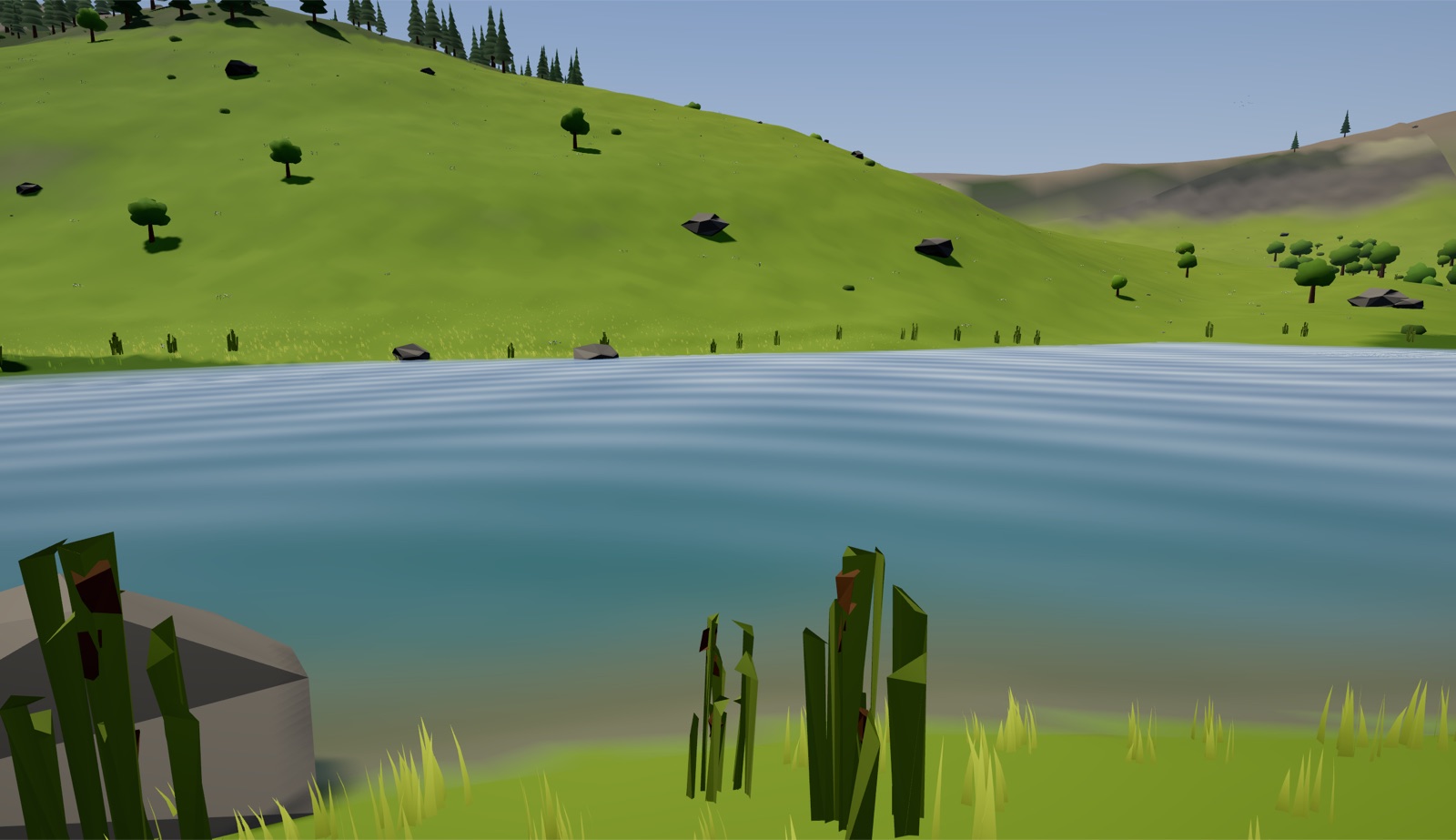
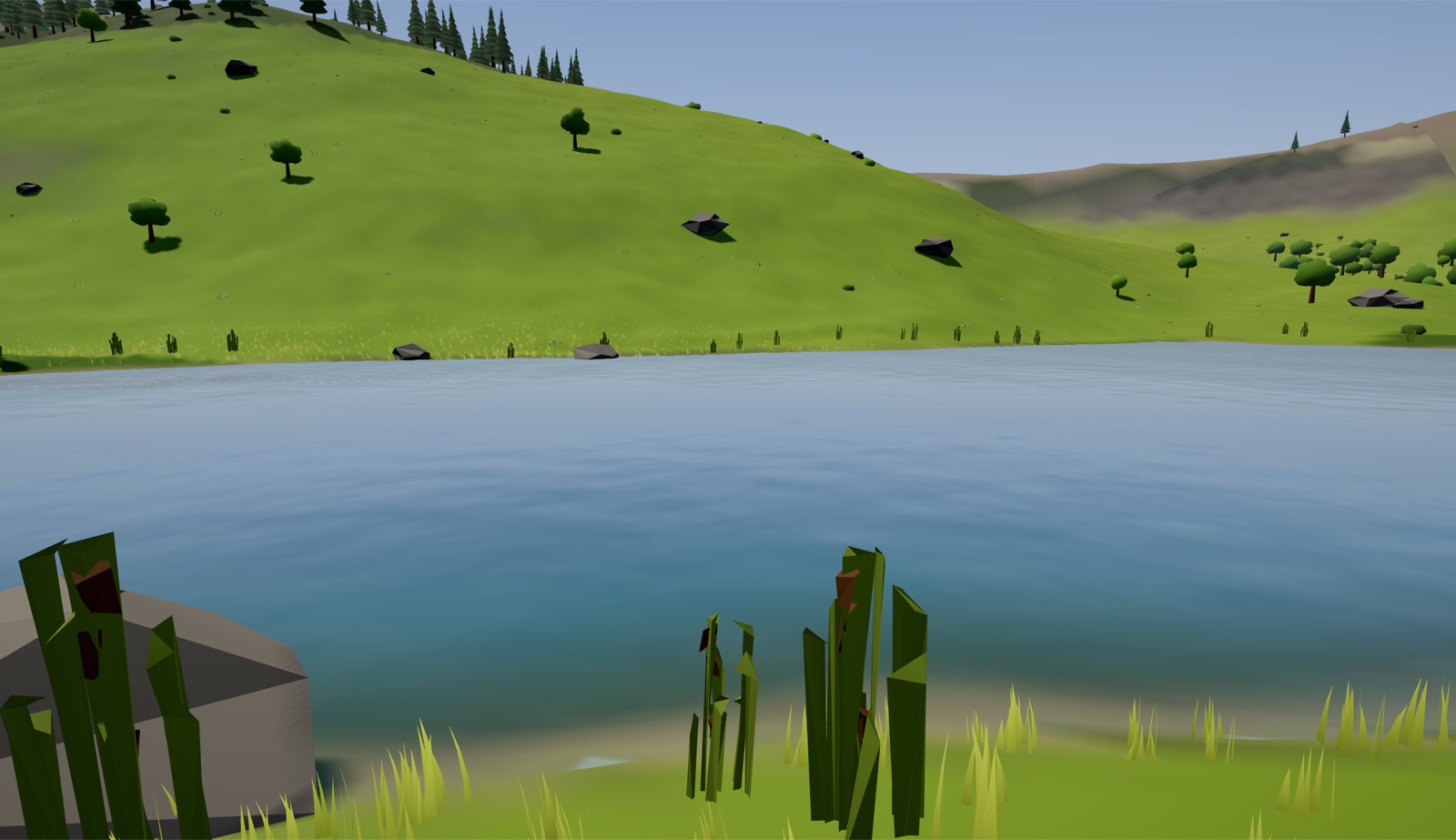
Our first try went the other way. We cut the stripes and made the water opaque, and it came out as a sheet of grey plastic. What sells water isn't its hue. It's seeing into it.
Reflection, and how much color
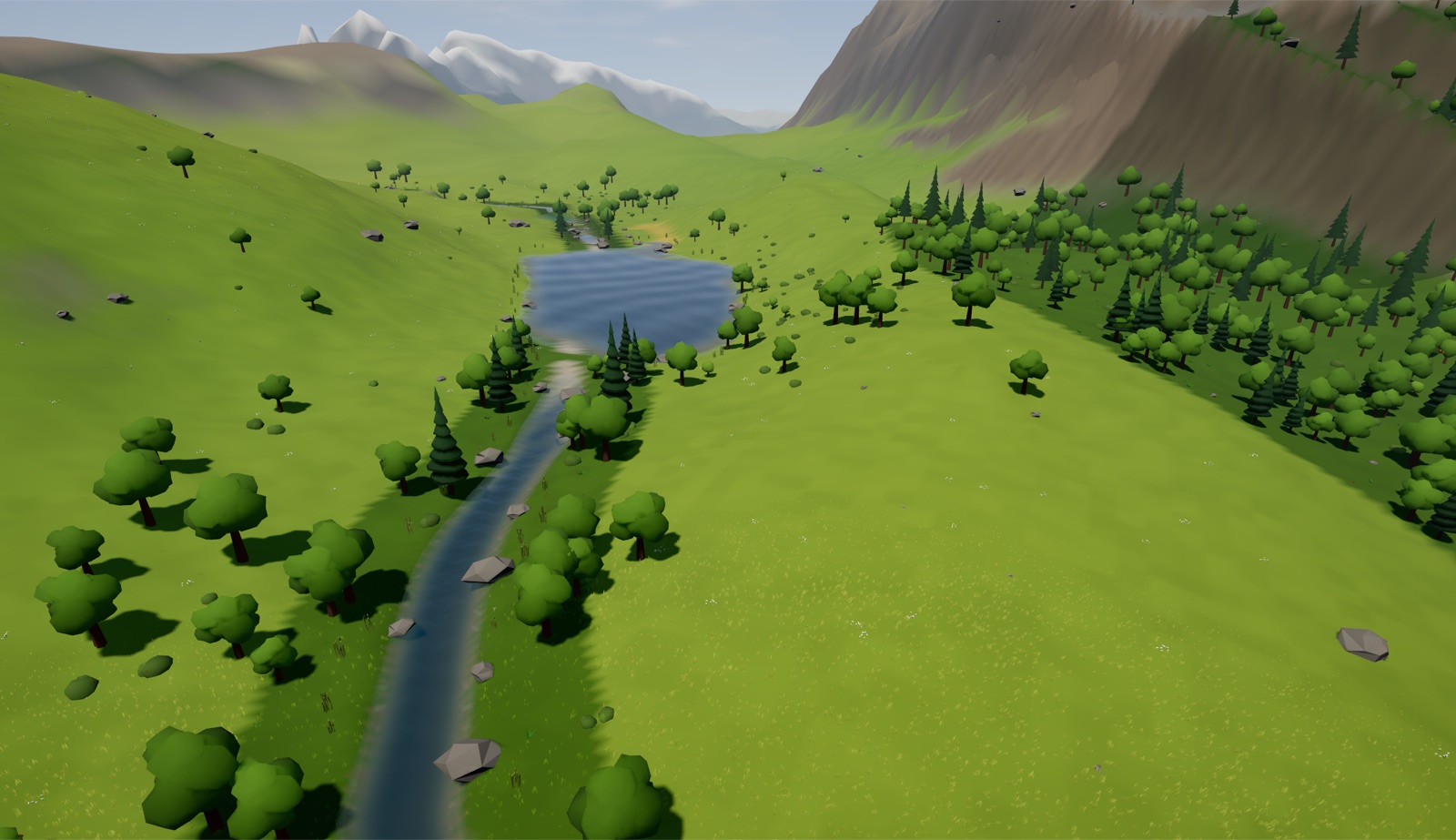
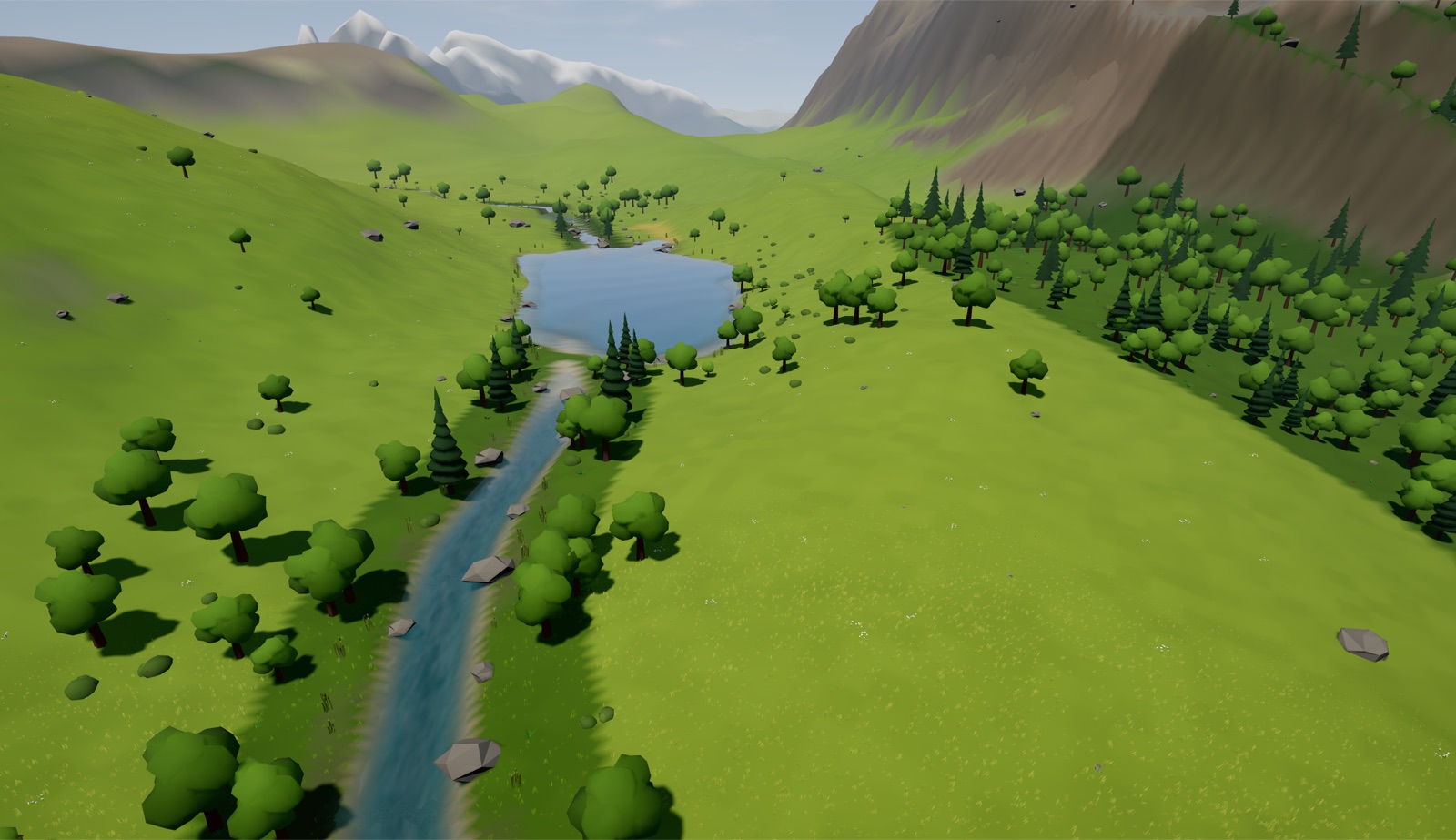
From a distance, a lake should mirror the sky. Inland water now picks up a strong Fresnel reflection of the sky at grazing angles, plus a darker band where the hills would be. Rivers got the same treatment, and for one round they turned an electric pool cyan, the most saturated thing on screen. In Eras, full saturation belongs to the realms' colors, so we pulled the rivers back to a green-blue over pebbles that reads as the same water as the lake.
Where the sea meets the sand
Calm lakes get no foam at all, just a thin bright meniscus. The sea gets surf. On a shared wave clock, offset along the coast so it never pulses in unison, a lacy foam band rolls in from about a meter deep, washes up the beach, and draws back, leaving a sheen on the sand that fades.
Wet sand took two tries. The first darkened by height above the sea, and on a low beach that meant the whole beach, which turned to olive mud. Now it's a band measured from the water's edge, full within half a meter and gone by four and a half, about a quarter darker and a little warmer. The dry, bright sand stays the main tone of the beach.
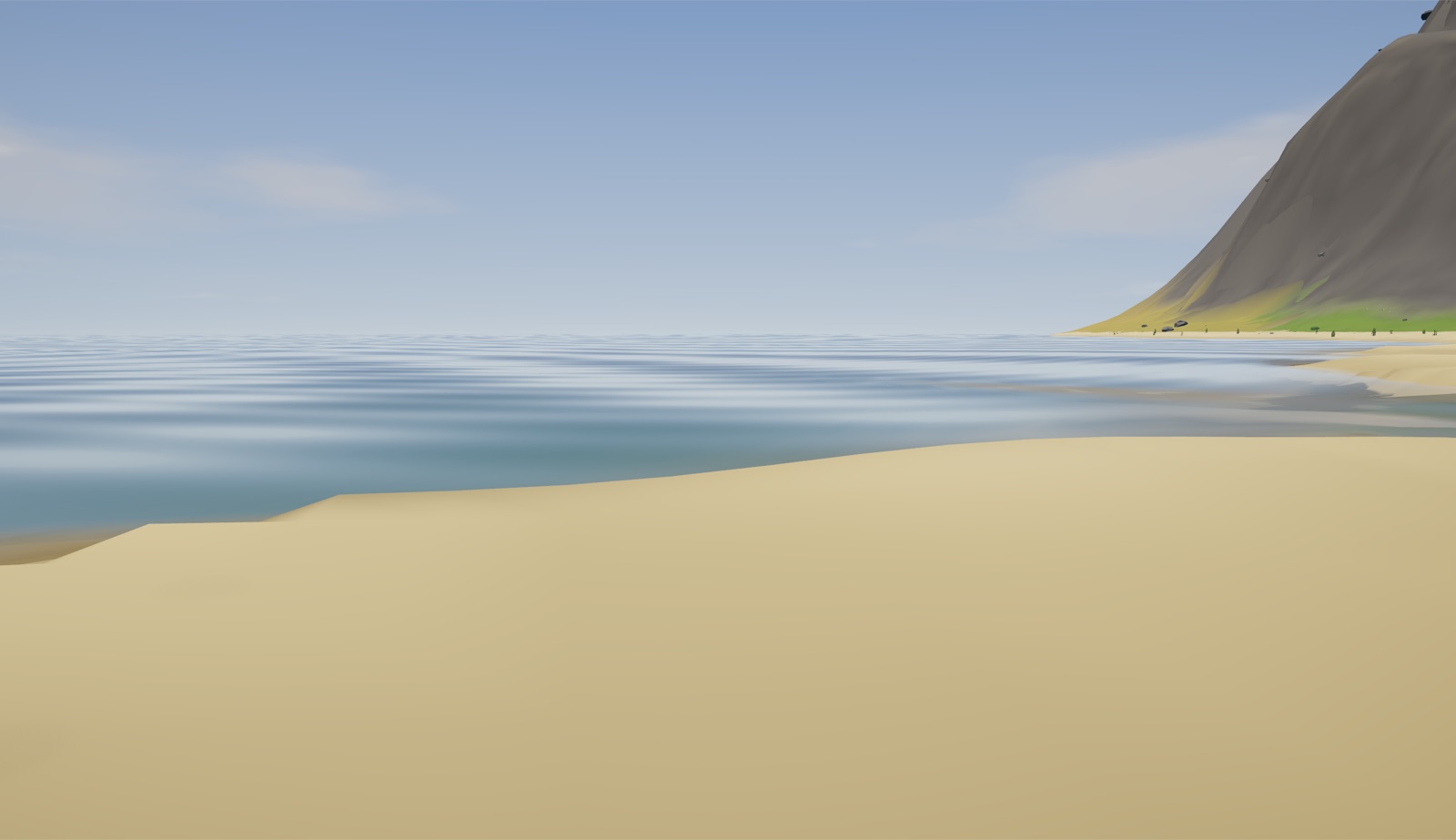
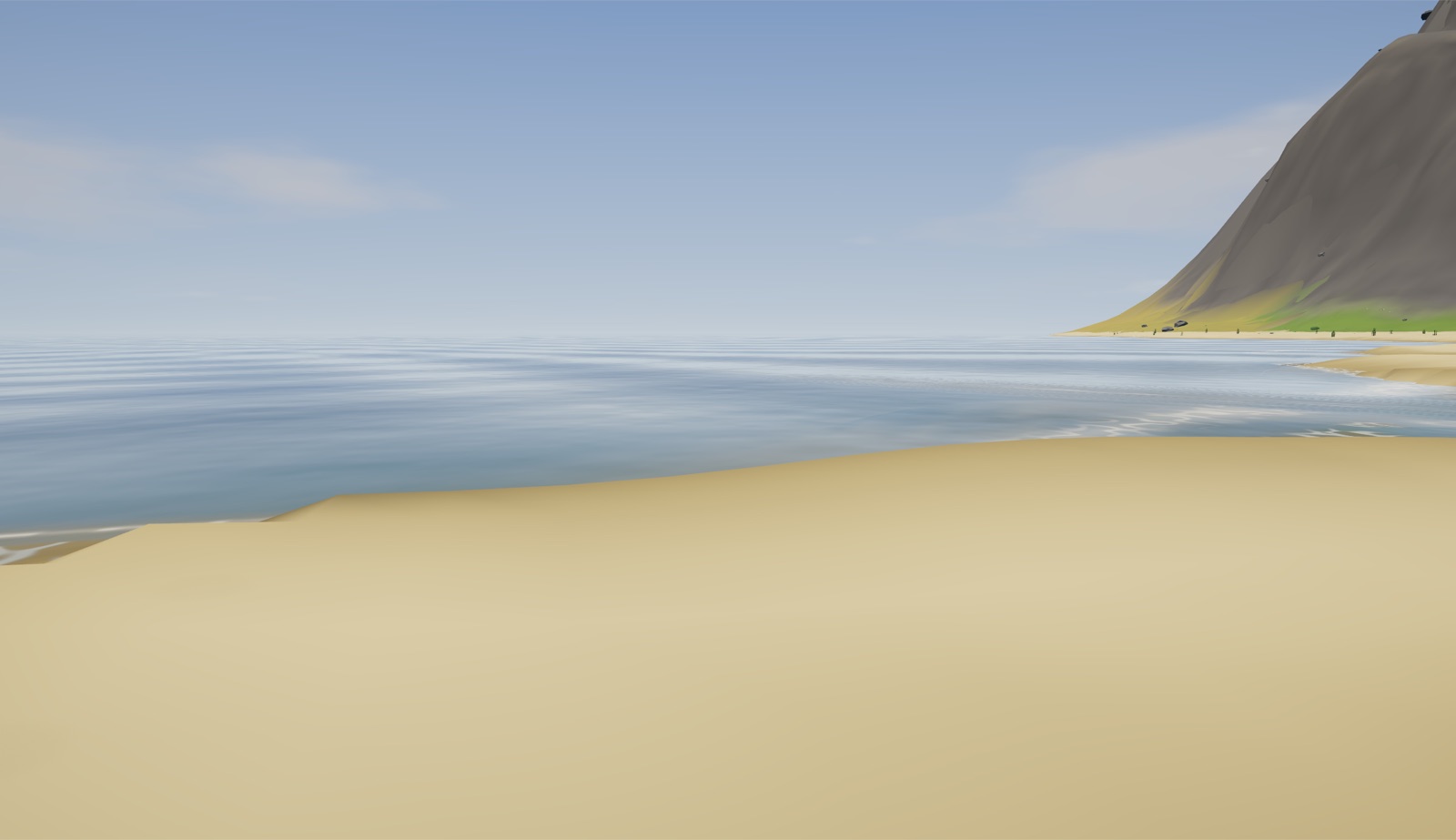
There's more to do. Far out, the sea still shows faint bands, and a few beaches step where the land itself does. Next comes wind: one wind for the whole world, so gusts move through the grass, the trees, and the surface of a lake together.