Softer shadows, and where the beach ends
Two small kinds of edge that made the world look unfinished, and what it took to fix them.
Eras is a browser game, but the bar we hold it to is a console one. A world like ours is mostly light and ground, so the edges where they meet do a lot of the work. This week we looked closely at two of them, and neither held up.
Shadows that stair-step
The sun in Eras casts one shadow map, centred on you and snapped to its own texels so it doesn't crawl as you walk. It covered a 140 m square at 2048 pixels, about 7 cm of ground per texel, and the filter took five samples within a single texel. Up close, every shadow edge was a staircase.
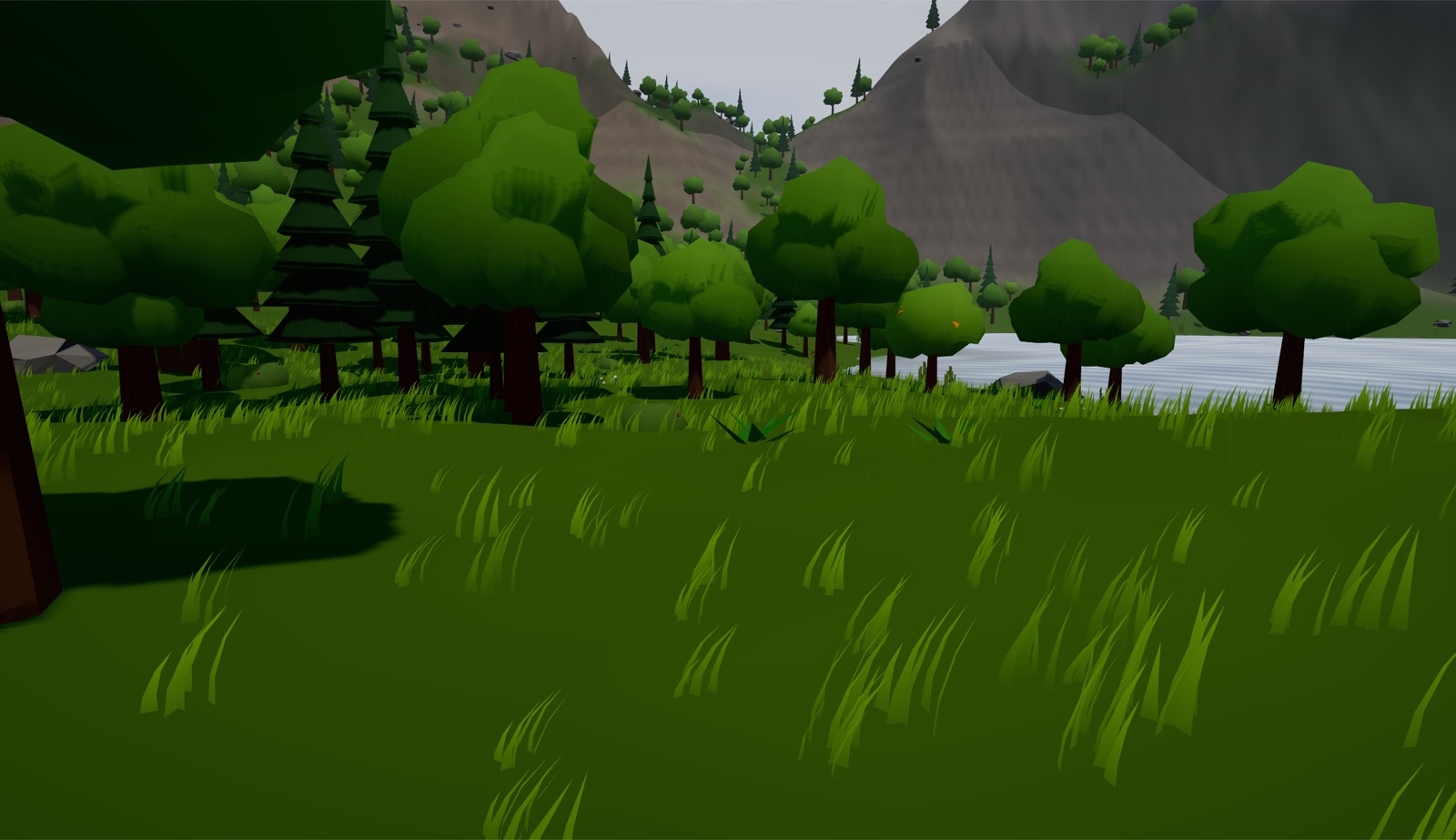
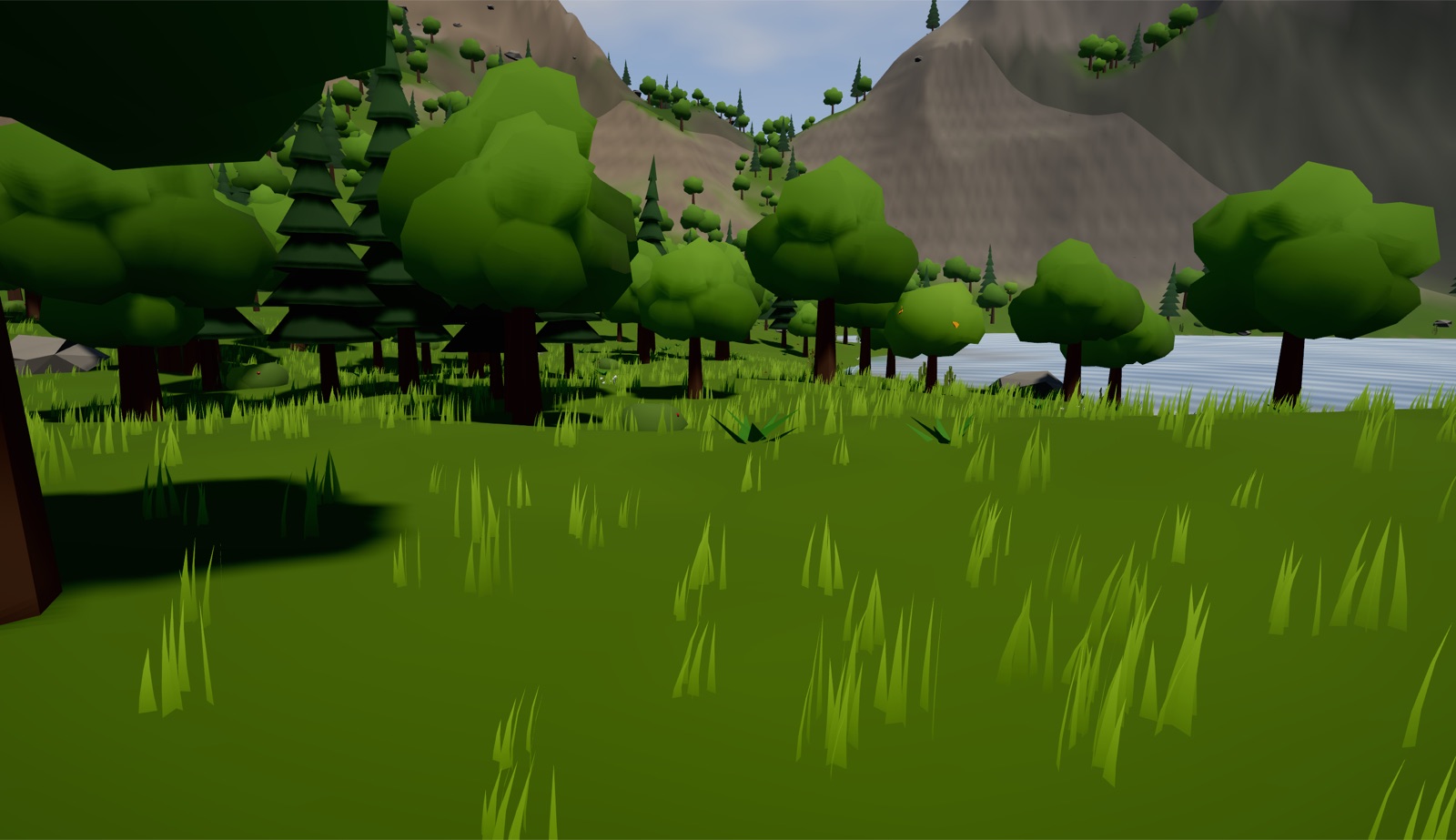
Now each pixel takes 16 samples spread over a disk about 20 cm across. The disk is laid out in a Vogel spiral and rotated by a per-pixel angle, so it never forms a pattern of its own. The size is set in meters rather than texels, so the edge is equally soft at every quality setting. It reads as a sun's penumbra, not a blur.
Shadows that stop
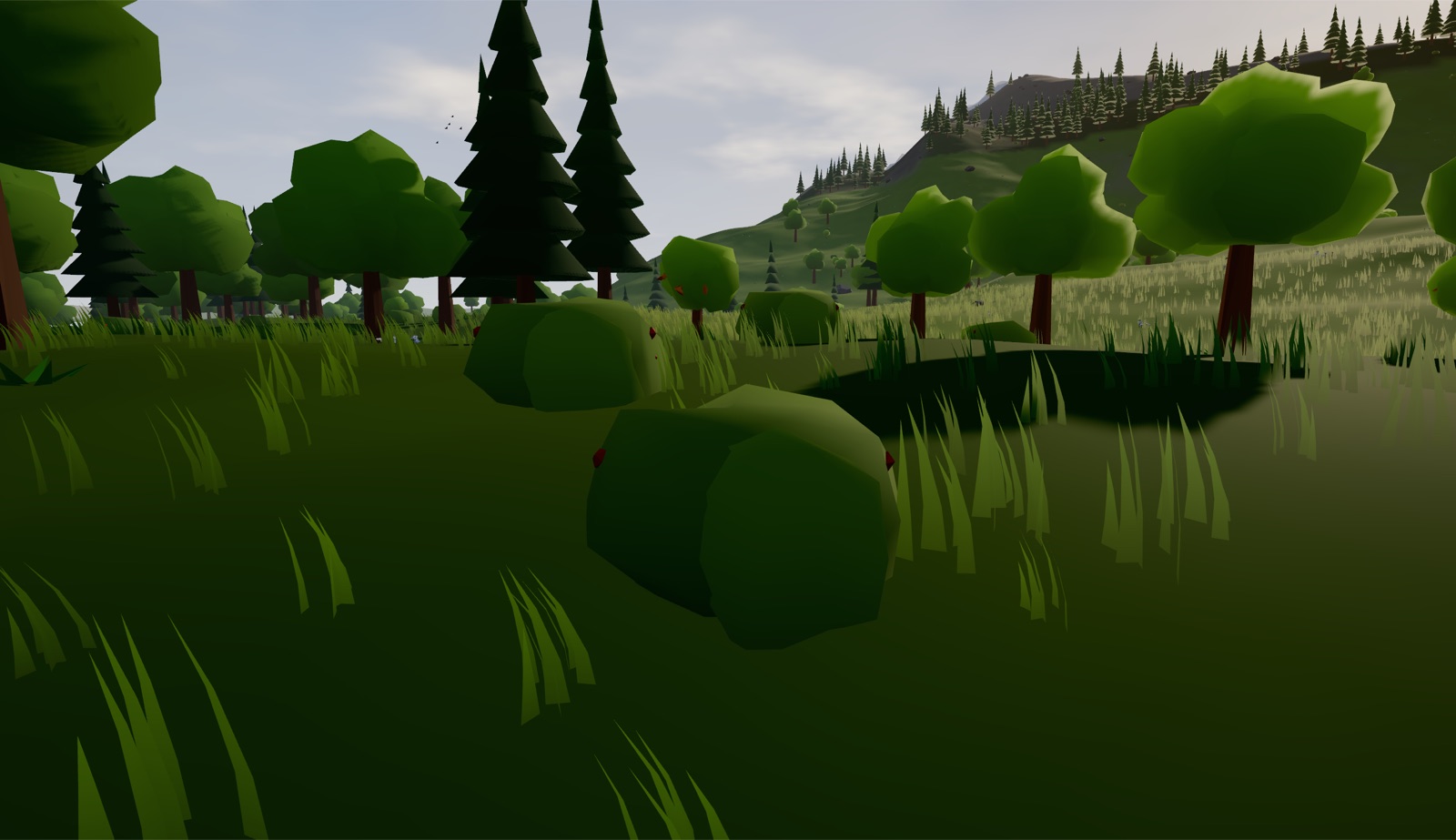
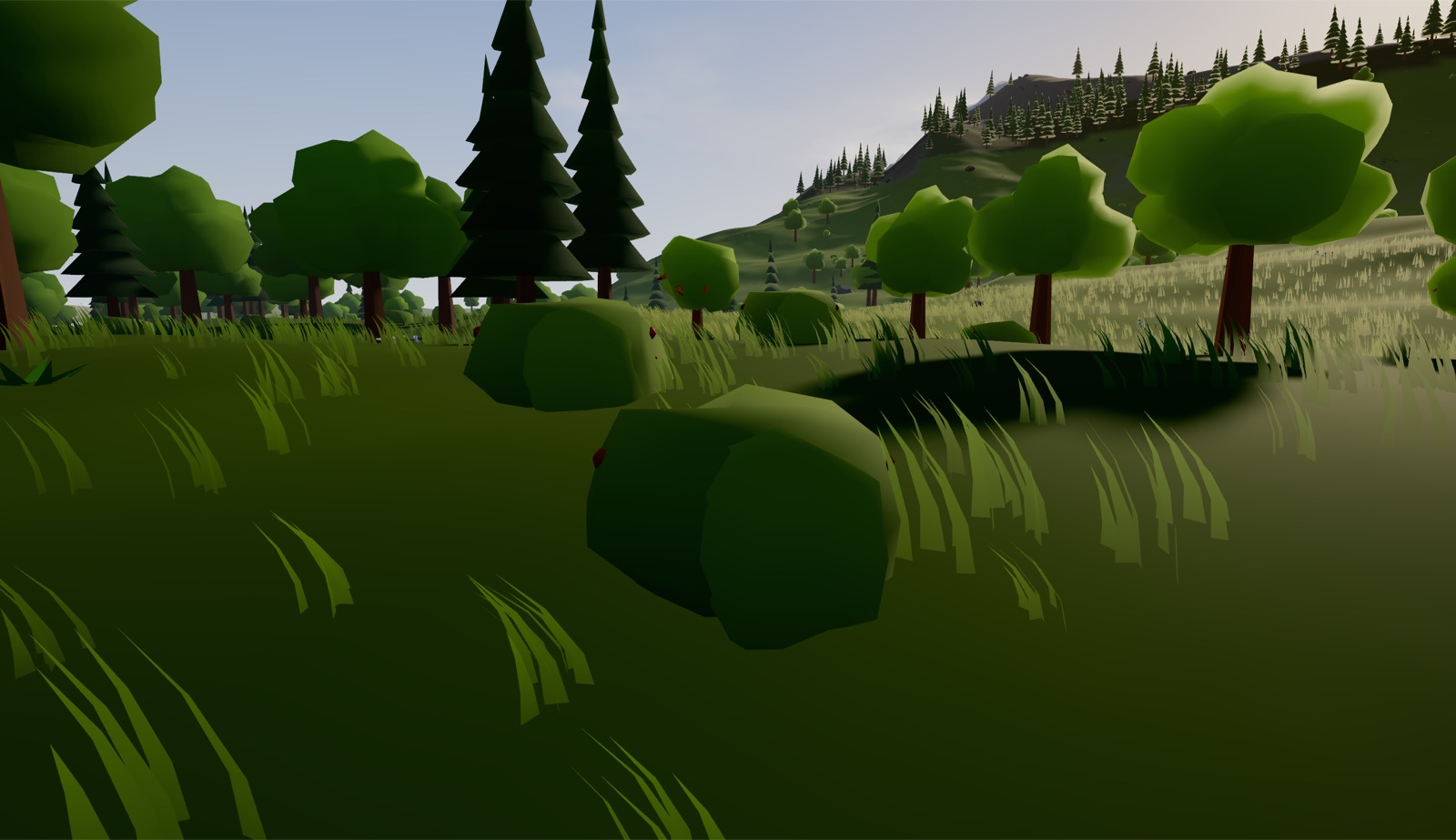
The other problem was distance. Past 70 m, trees stood on the ground with no shadow at all, and a valley lost its depth. On High quality (the default), the shadow map now covers 280 m at 4096 pixels. That's the same detail per meter, and shadows now reach twice as far.
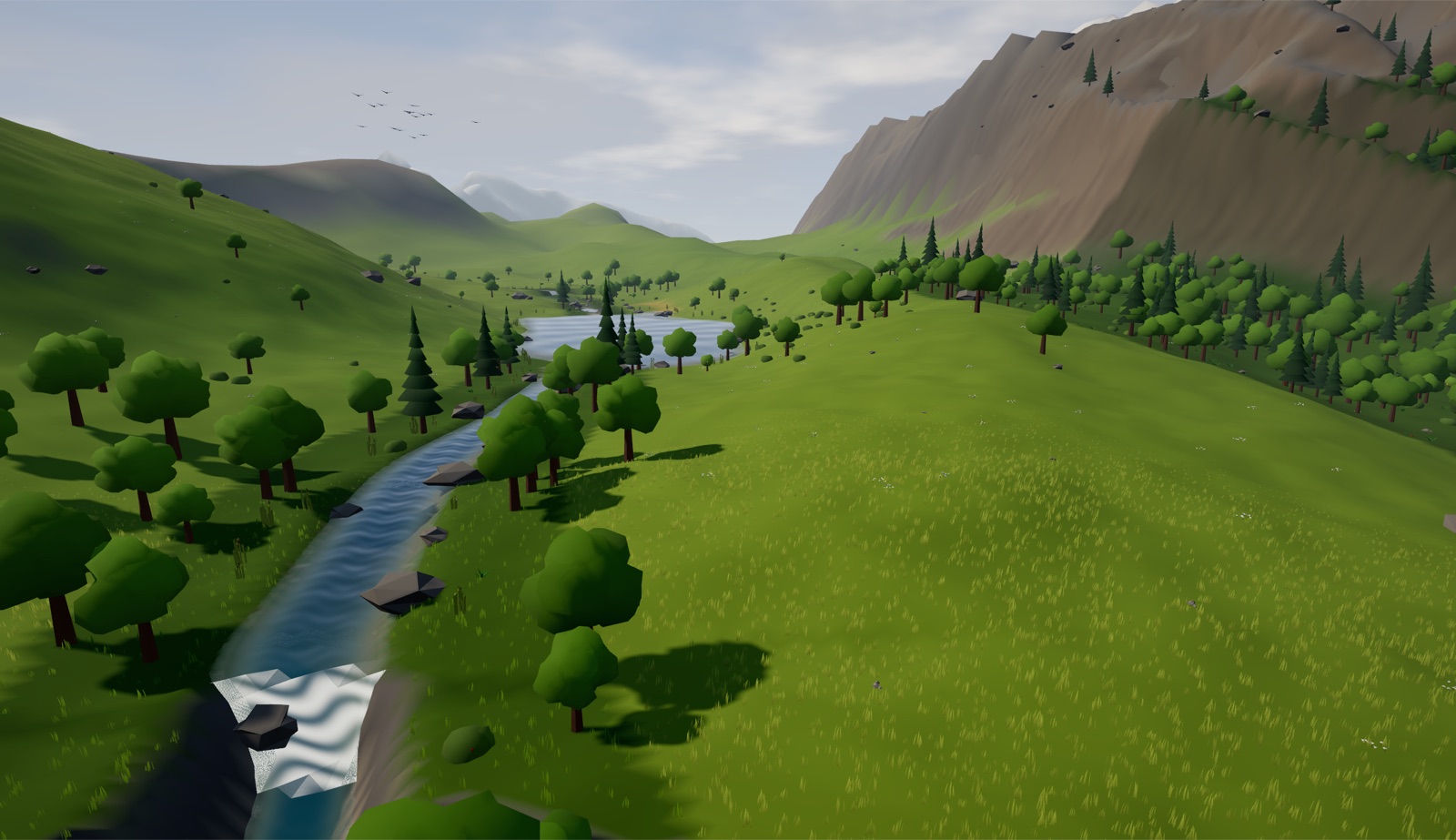
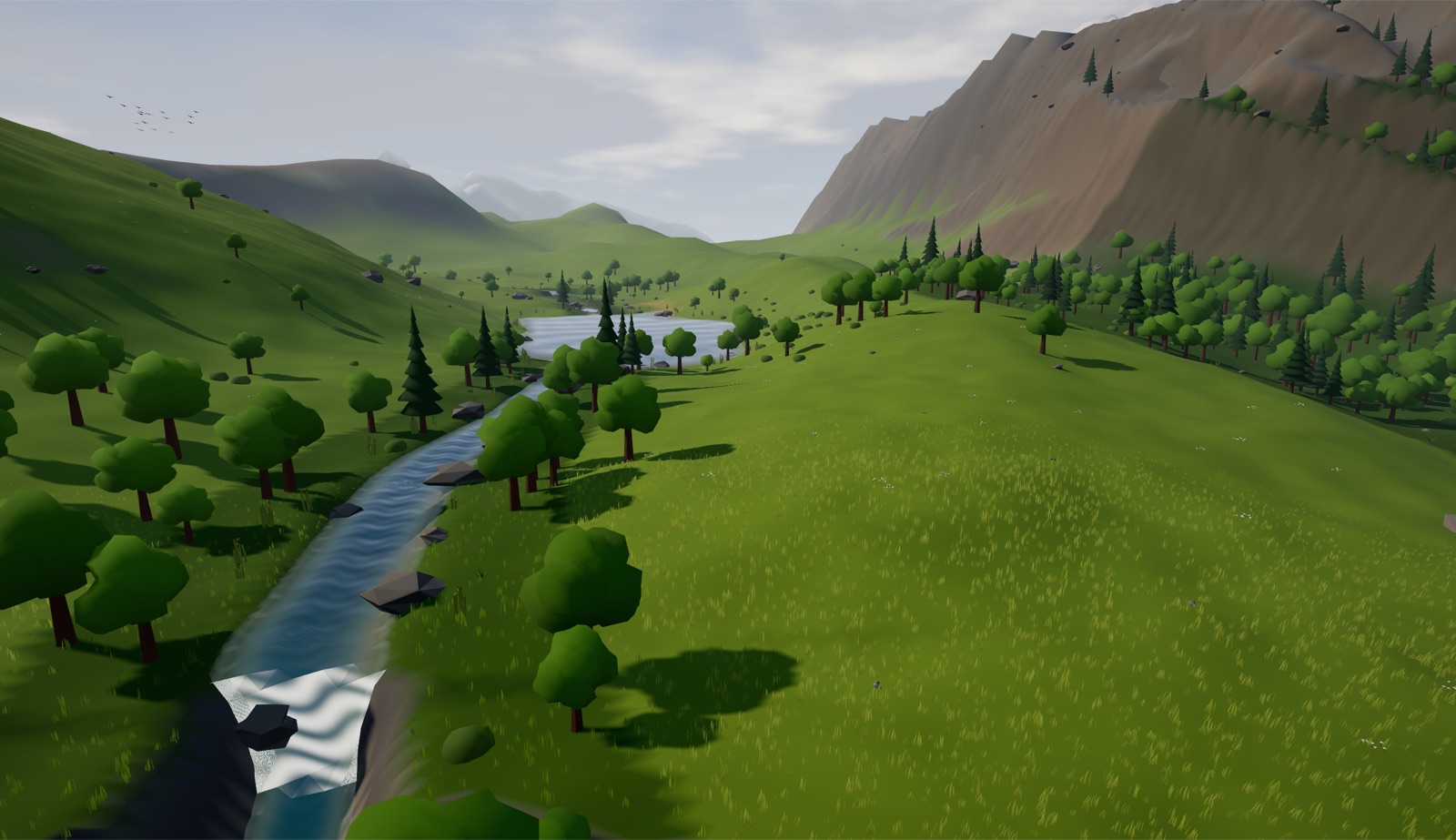
We measured the whole change at about 0.3 ms per frame on a forest at noon (5.2 to 5.5 ms of GPU time). That's well inside our budget.
Where the beach ends
Sand and grass were drawn per terrain cell, so the line between them followed the mesh's grid: big square steps along every beach. Now each vertex near you carries both colors and a continuous "how beachy is this" weight, using the same rule the world generator uses. The shader draws the actual edge per pixel against two layers of world-space noise, one about 4 m across and one about 1 m. The generator itself didn't change. Only the drawing did.
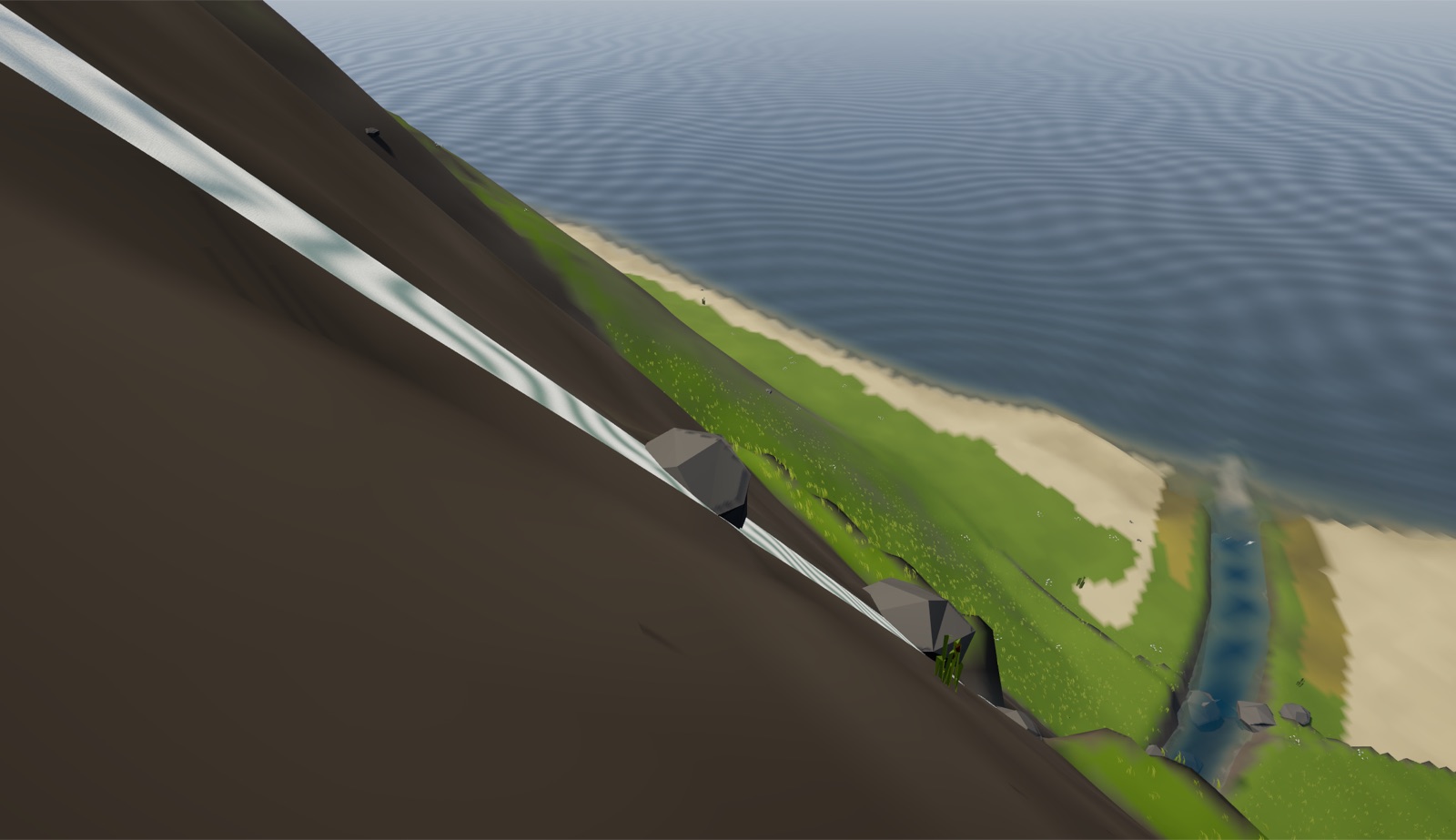
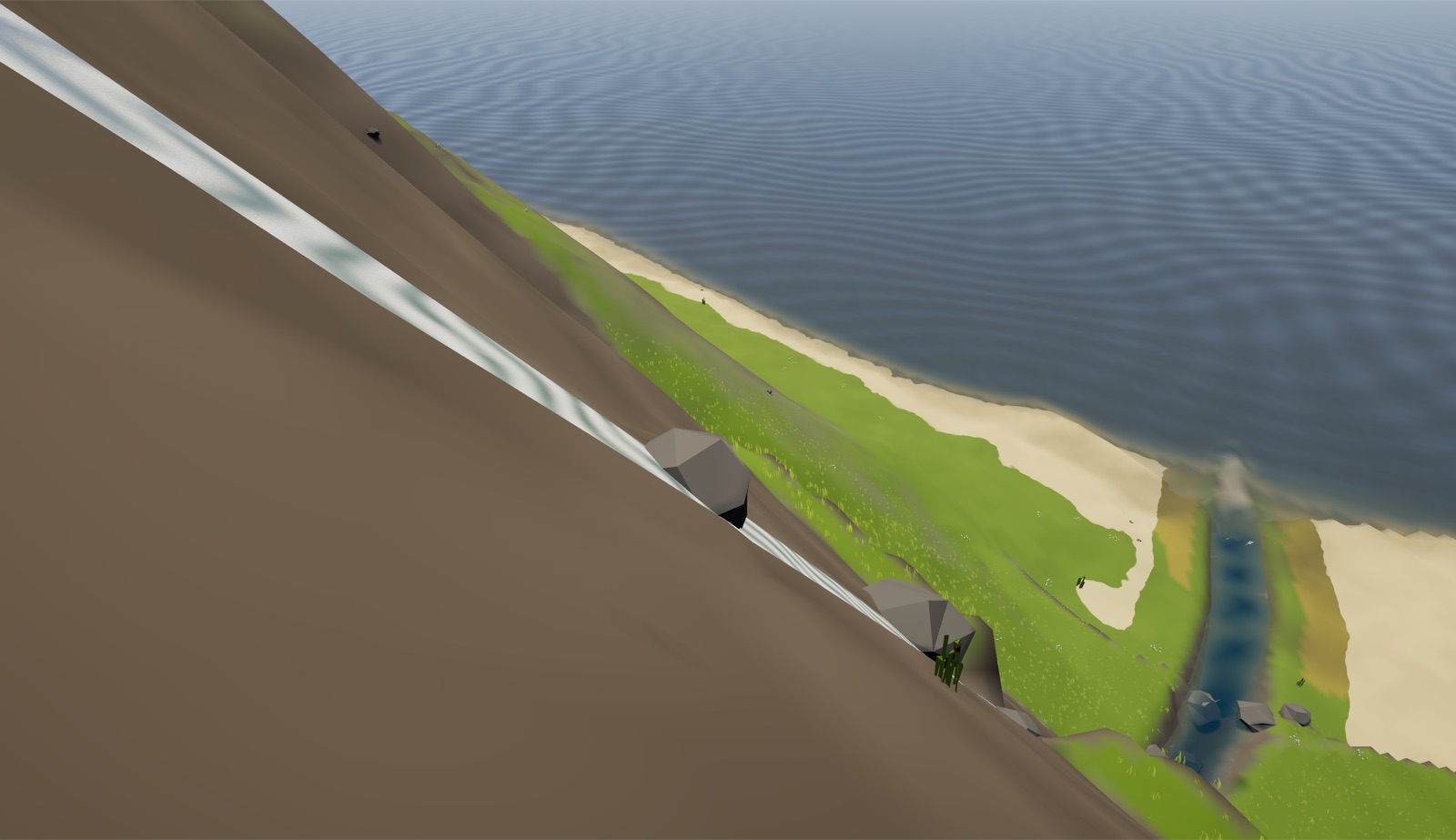
These changes come with the next update. Next up is the water, which is due a real pass of its own.